Our Work

A Focused Portfolio Shaped by Real Learning Barriers

Our work is not a collection of random projects. It is a focused portfolio of programs shaped by real barriers in a child’s learning ecosystem — barriers of awareness, access, and capacity.

Some barriers are visible, like a child unable to speak, read, or write confidently in English. Some are quieter, like a parent not knowing what support to expect from school, a school needing stronger systems, or a community lacking access to credible information and opportunities.

Through Akshara, Parents of India, Cartwheel School, Project Setu, and school transformation initiatives, we build credible, researched, and evidence-based responses that help children, parents, and schools move closer to meaningful learning, confidence, and future readiness.

Three Core Levers:AwarenessAccessCapacity
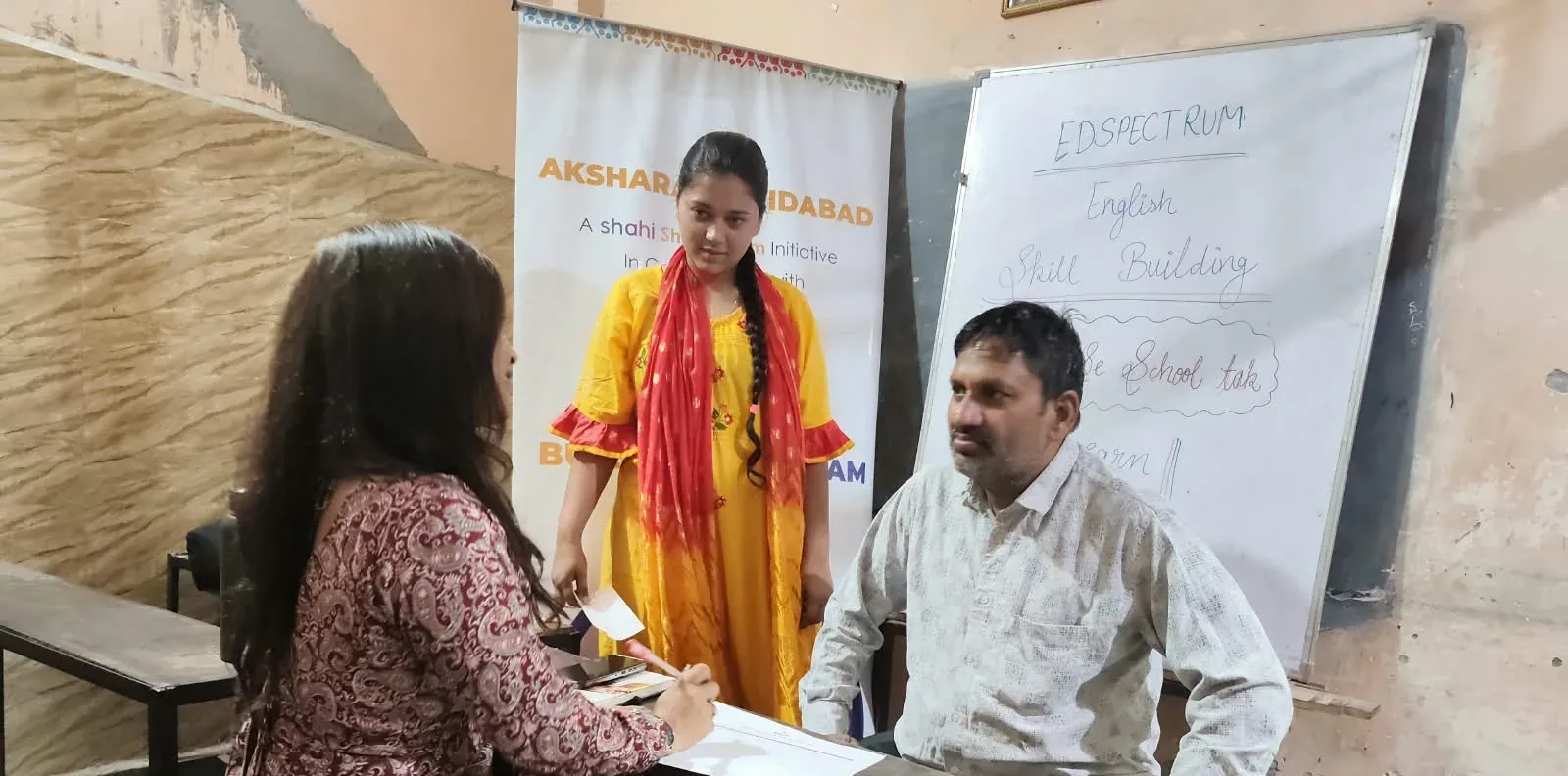
Students and facilitators in an Edspectrum learning session
Practice in Action: Grounded classroom sessions, family engagement, and structured student practice ecosystems.

Strategic Framework

Awareness. Access. Capacity.

Children do not grow through school alone. Their learning is shaped by what homes understand, what schools can provide, and what opportunities they can actually access. That is why Edspectrum Foundation works through three core levers: awareness, access, and capacity.

Lever 01
Adults discussing learning in a community setting

Awareness

Helping adults around the child make informed choices.

Awareness means making credible, researched, and evidence-based knowledge accessible to parents, families, schools, and communities so they can understand child development, learning needs, schooling choices, and how to support children better.

Shows up through:

Parents of Indiaparent conversationsschool-parent engagementcredible contentexpert conversationsand awareness-building work.

Awareness helps parents and communities understand what children need, before gaps become permanent.

Lever 02
Students participating during an English learning activity

Access

Access means creating meaningful learning opportunities for children who usually do not receive them, and making sure those opportunities are usable in their real school, home, language, and community contexts. Access is not only about making something available. It is about whether a child or family can reach it, understand it, practise it, and benefit from it.

Shows up through:

AksharaProject SetuCartwheel Schoolcontent accessibilityexposure opportunitiesschool-based programsand learning opportunities.

Access creates real pathways for children to learn, practise, express, and grow.

Lever 03
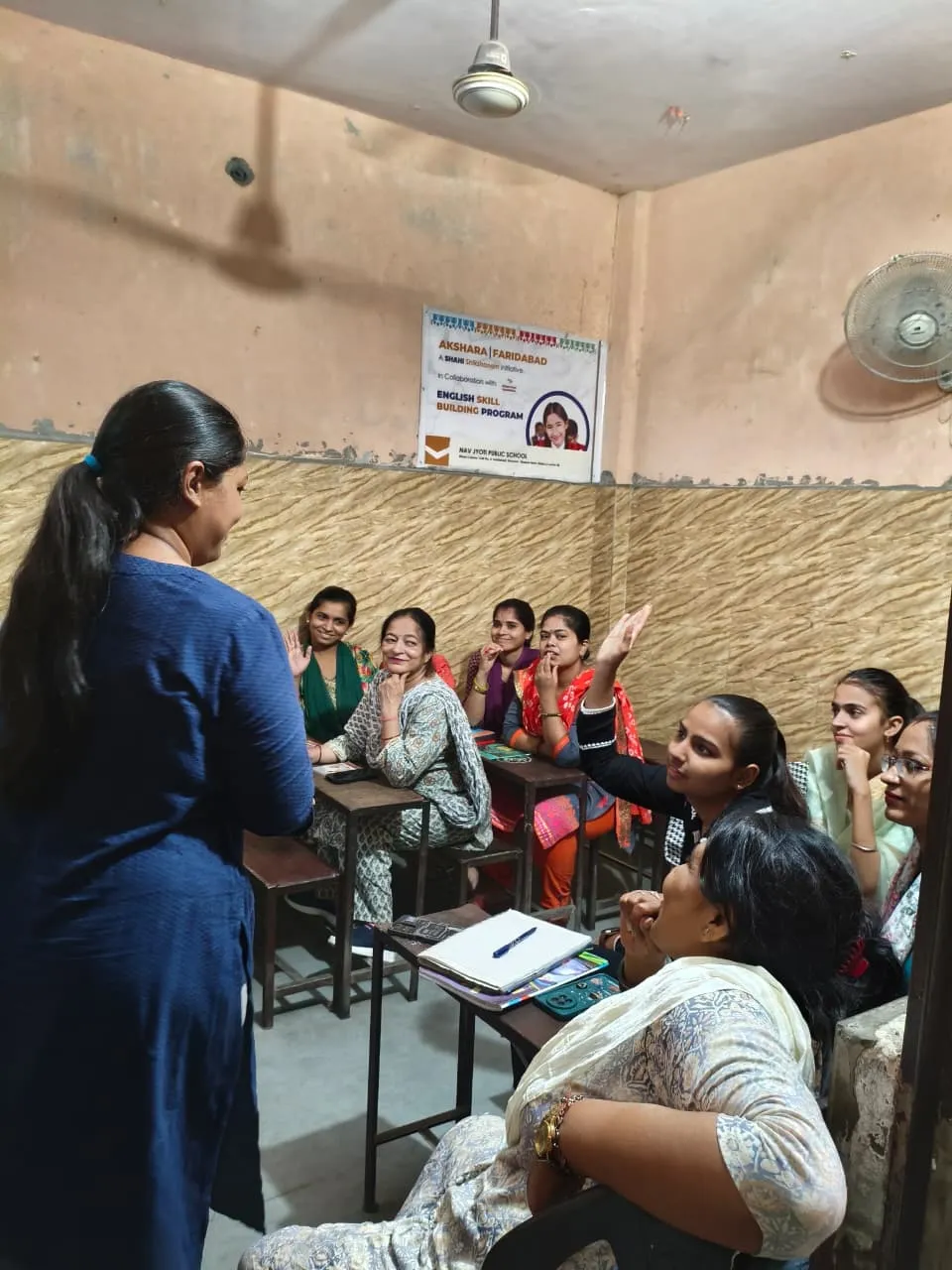
Educators and facilitators gathered during a professional session

Capacity

Capacity means building the skills, confidence, developmental readiness, and learning abilities children need for adult life. It also means strengthening the parents, schools, and communities that shape their learning and choices.

Shows up through:

English skill-buildingteacher capacity buildingschool transformationparent engagementyouth and women skillingtechnology-enabled learningand structured program implementation.

Capacity builds children’s readiness and strengthens the people and systems around them.

The Multiplier Effect

Why All Three Levers Must Work Together

Access without awareness leaves families uncertain of what to seek. Awareness without capacity leaves adults unable to support children. Capacity without access leaves children without spaces to learn. When all three operate in unison, systemic change becomes durable.

Informed Homes
Responsive Classrooms
Active Child Practice

Core Portfolio

Flagship Programs

Our flagship programs address two critical parts of a child’s learning ecosystem: children need access to meaningful skill-building, and parents need credible awareness to support them better.

Through Akshara, we build English skill-building access and capacity for children in government and low-income schools. Through Parents of India, we create credible, researched, and experience-led conversations that help parents make more informed choices for their children.

Together, these programs reflect Edspectrum’s larger belief: children grow better when both school-based opportunities and home-based awareness become stronger.

Flagship 01English Skill-Building Ecosystem
Barriers:AccessCapacity

Akshara English Skill Building Program

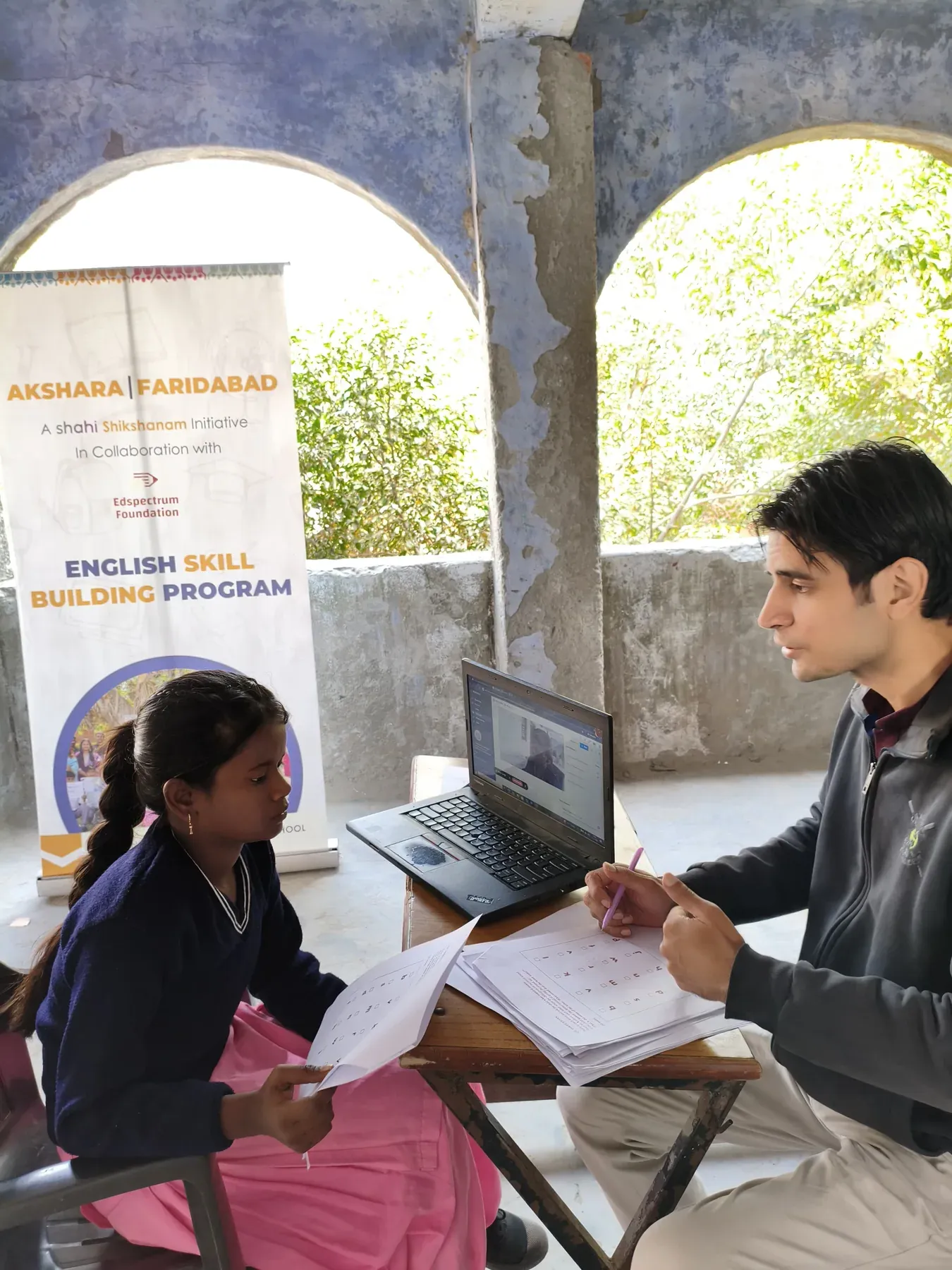
Akshara is Edspectrum Foundation’s flagship English Skill Building Program for Grades 6–10 students in government and low-income schools. It is designed to close the English access gap through a structured school-home practice ecosystem.

The program combines research-based classroom instruction, AI-IVRS supported speaking practice, parent engagement, and public learning showcases so children can build listening, speaking, reading, and writing skills with confidence.

Akshara is not tuition or a one-time English activity. It is a structured model that helps children move from hesitation to participation, from practice to visibility, and from fear of English to ownership of English as a learning skill.

The 4-Part Practice Architecture

Classroom Instruction

Structured listening, speaking, reading, and writing modules.

AI-IVRS Speaking Calls

Home-based interactive practice overcoming household device constraints.

Parent Engagement

Building awareness, encouraging practice routines, and family trust.

Learning Showcases

Public speaking exhibitions turning classroom practice into pride.
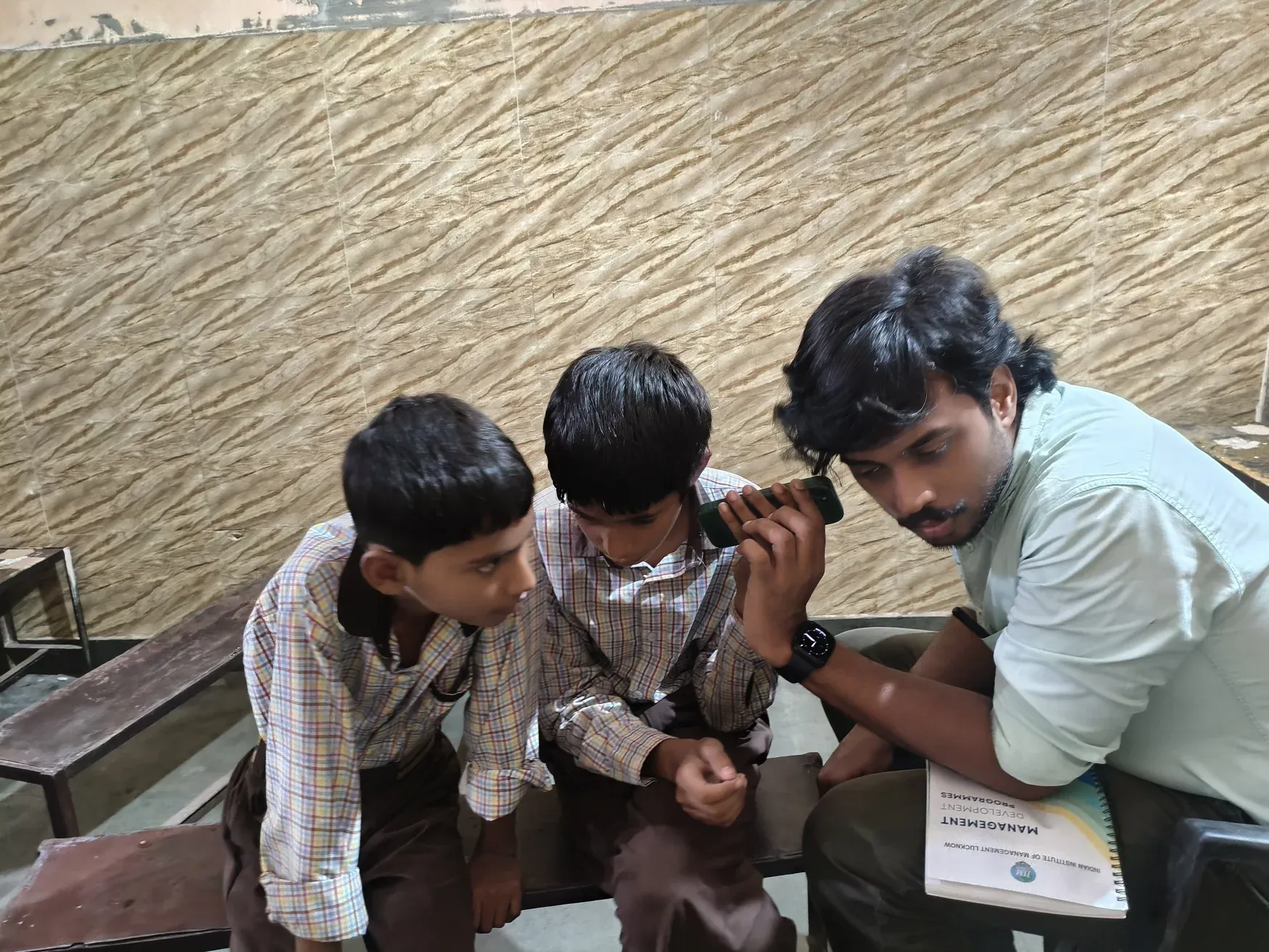
Students using mobile phones with facilitator support
Facilitator-supported mobile speaking practice sessions.
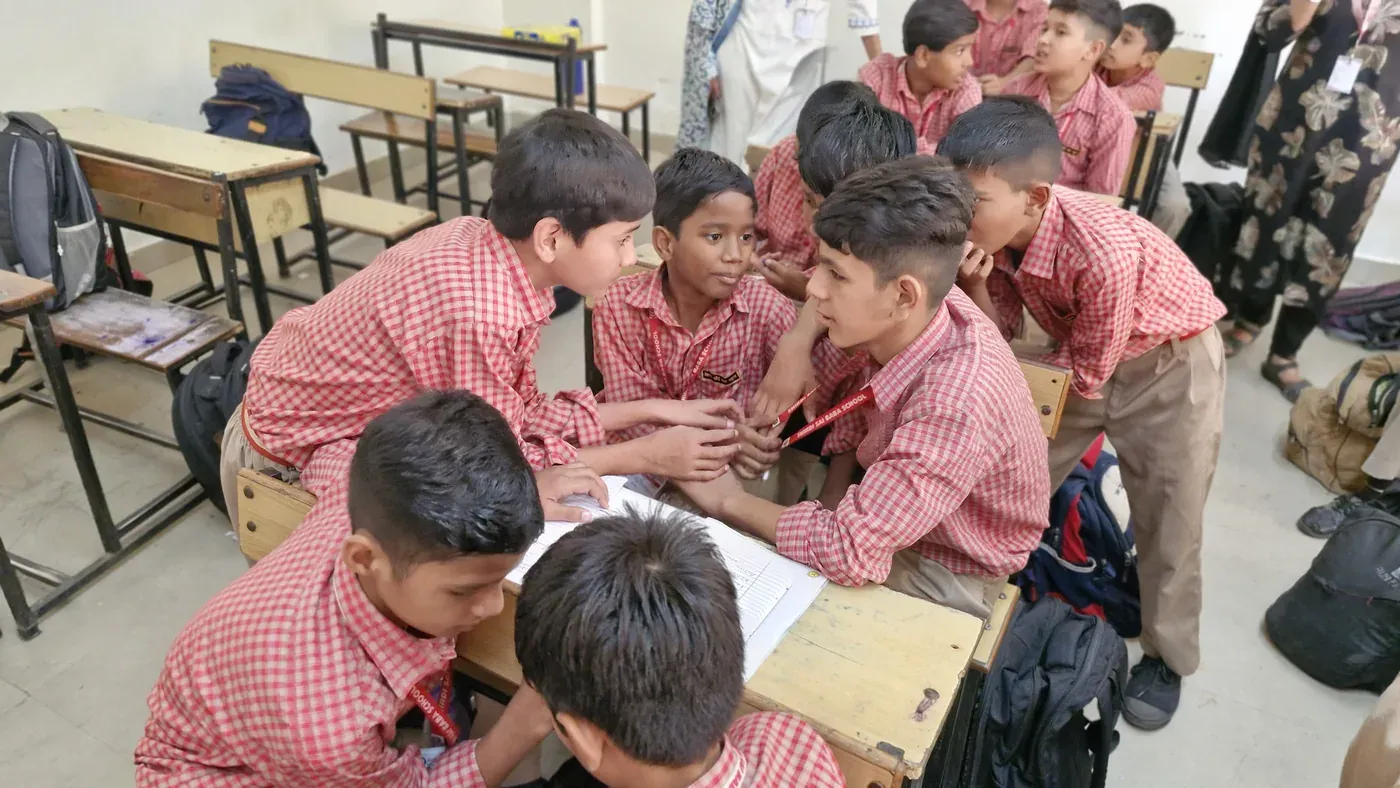
Students working together on a classroom activity during Akshara
Akshara Classroom: Students working together during a small-group classroom activity.

Assessment Progress · 2025–26

2025–26 baseline-to-endline assessment scores

Writing

+27.96 points

16.34 → 44.30

Speaking & Listening

+20.69 points

34.91 → 55.60

Akshara builds English practice ecosystems across school and home so middle-school students can use English with confidence, visibility, and ownership.
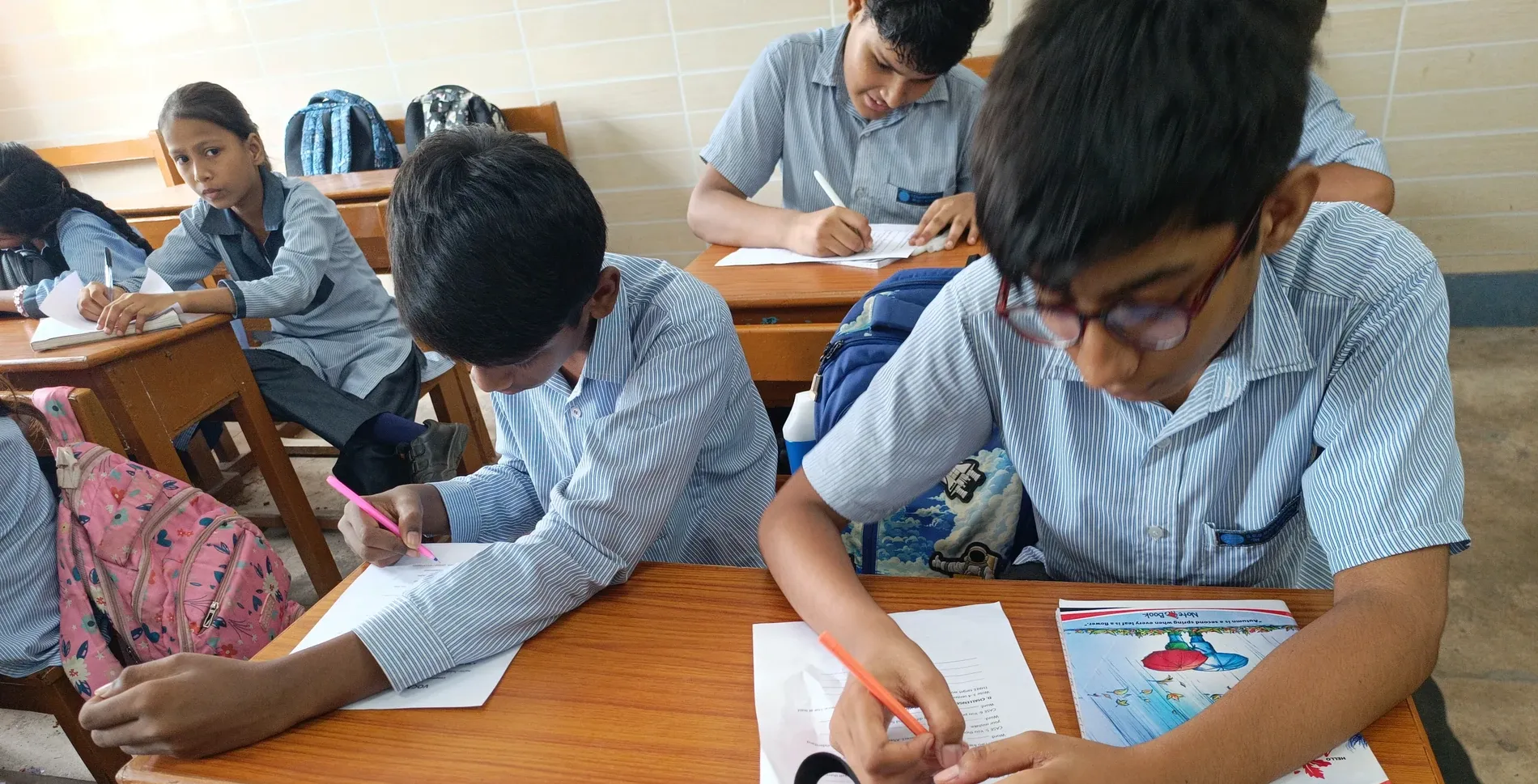
Students concentrating on written work during a classroom learning session
Classroom learning opportunities a partnership can help sustain.

Structured Program Components

  • Research-based classroom instruction
  • Listening, speaking, reading, and writing practice
  • AI-IVRS supported speaking practice
  • Parent engagement
  • Public learning showcases
  • Baseline-to-Endline assessment tracking

Inside Akshara

Practice, participation and public expression

Selected photographs from classroom and showcase activities. Learning outcomes are reported separately using program assessment records.
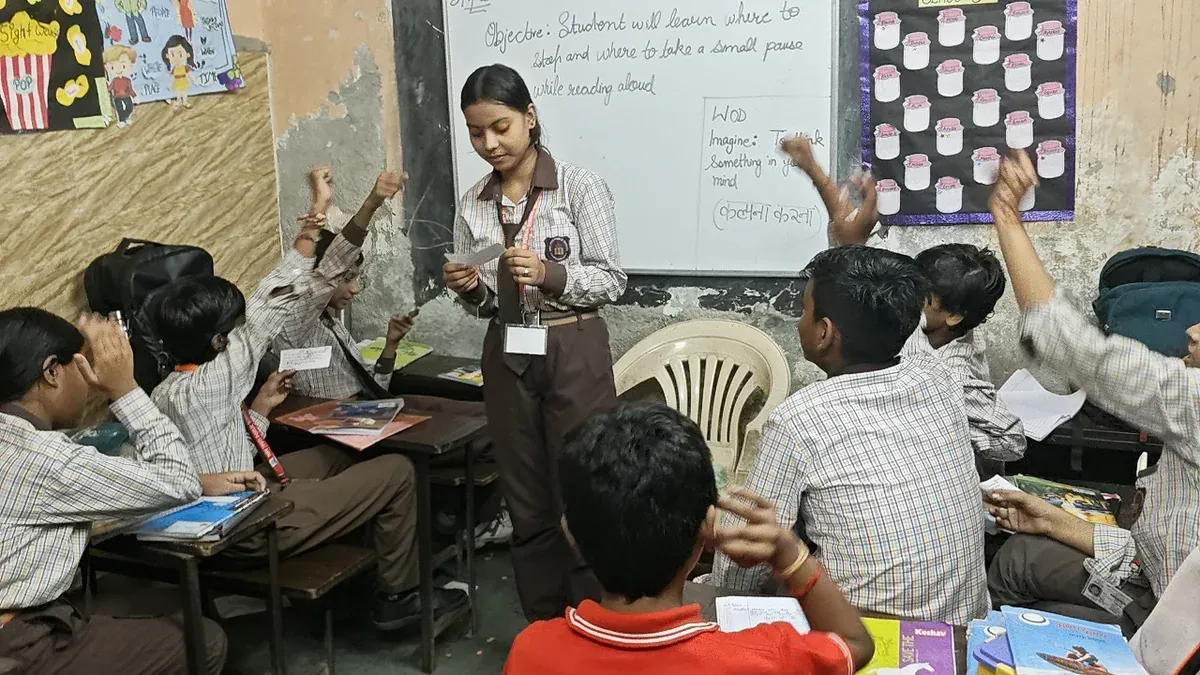
A student holding a sheet at the front of class while classmates raise their hands

Speaking and participation

A student-led classroom exchange.
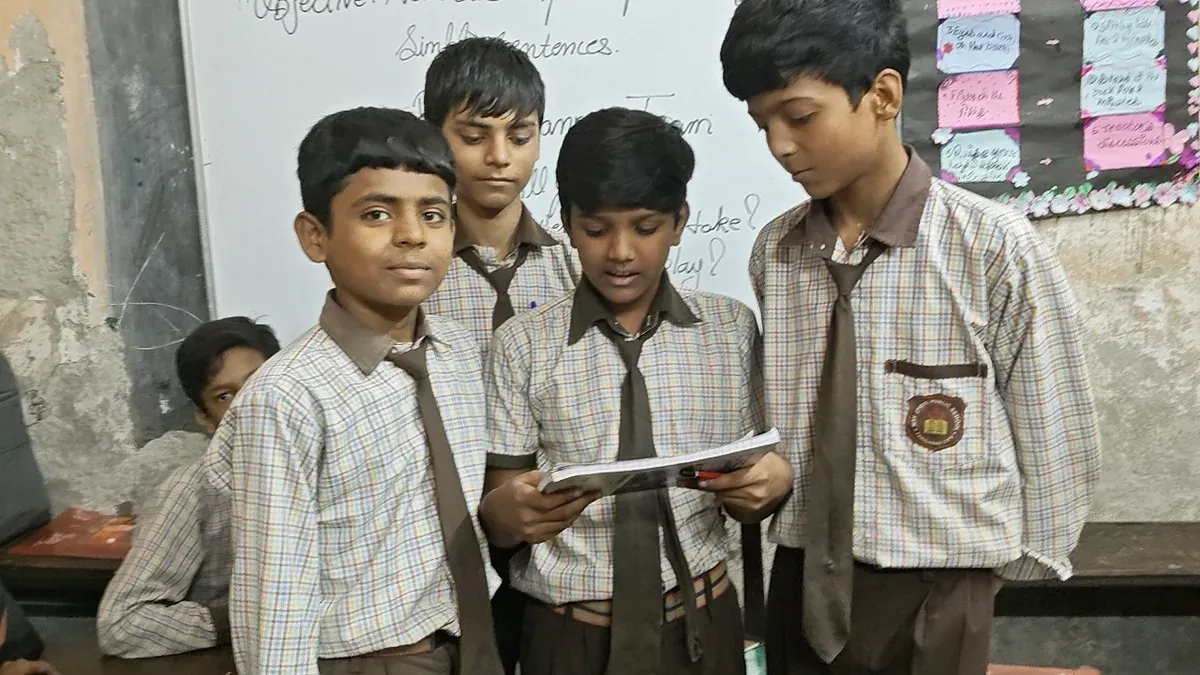
Students reading from a printed page together at the front of a classroom

Reading together

Students working with a printed text.
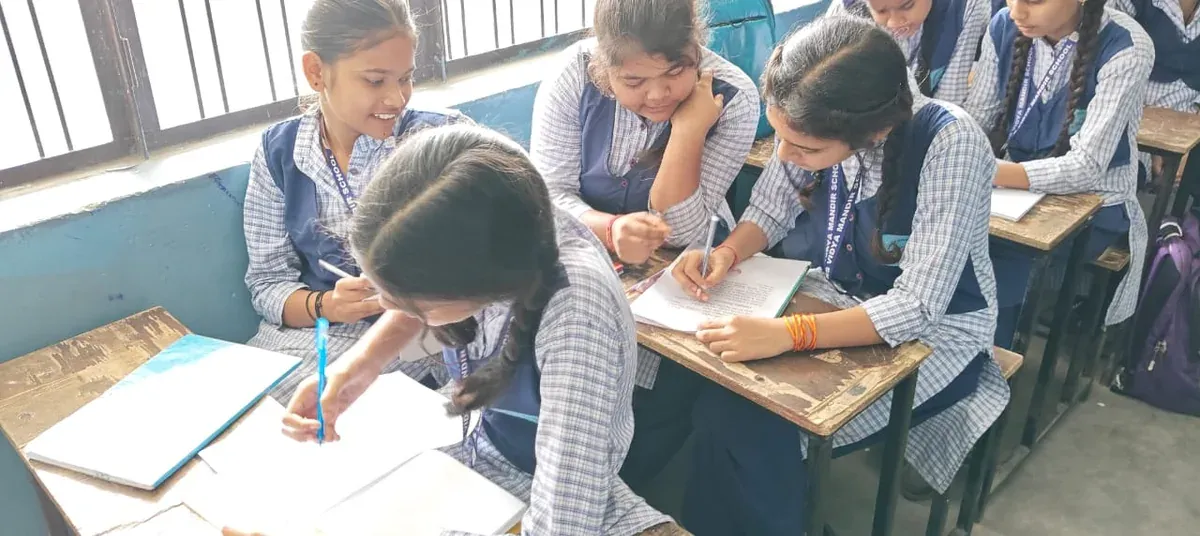
Students working with notebooks and writing materials at classroom desks

Writing practice

Written work during a classroom activity.
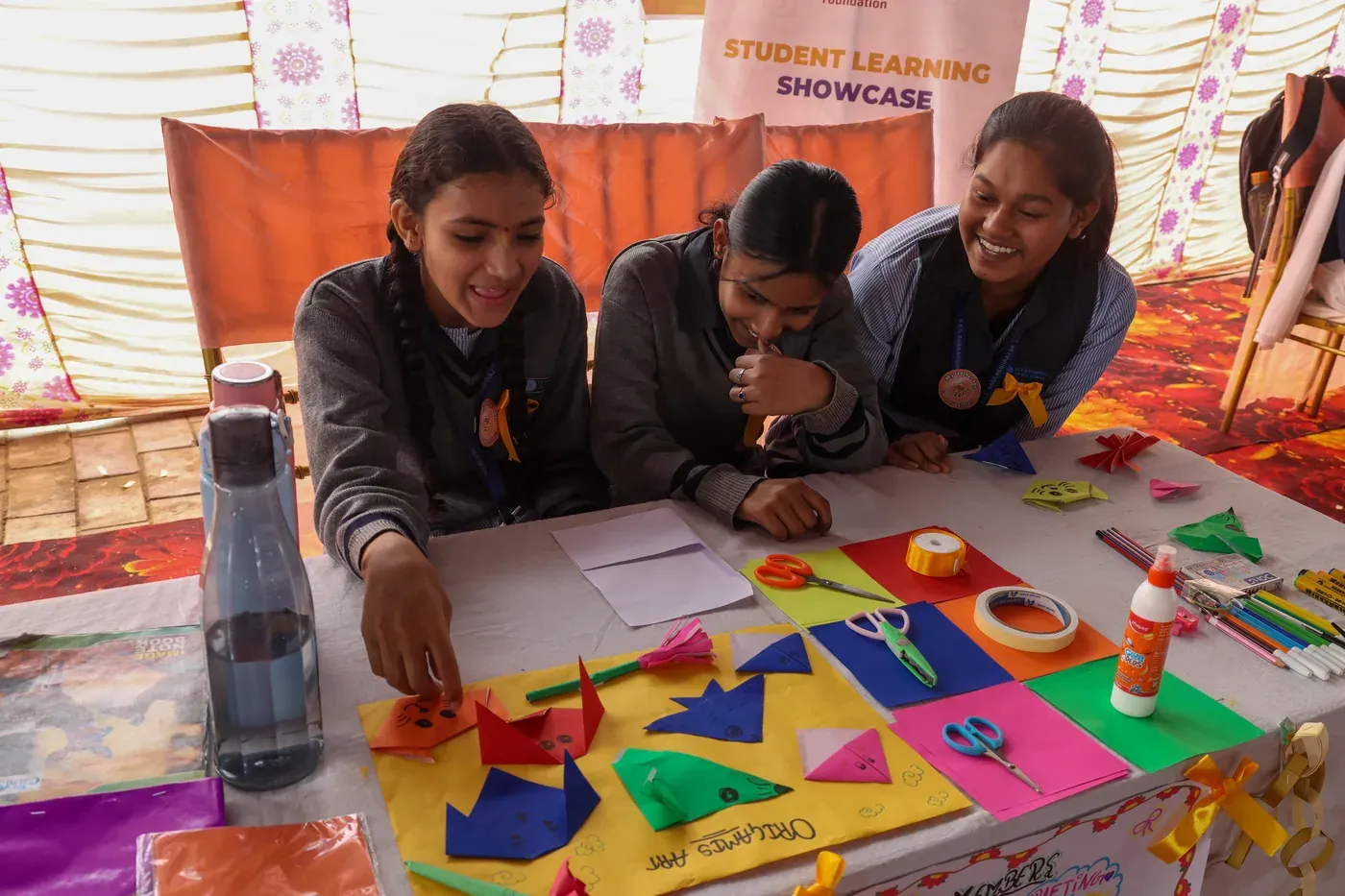
Students arranging colourful learning materials at a public showcase table

Public learning showcase

Children demonstrate work at a showcase stall.

More moments from classroom practice · view photographs

Additional documentary moments from classroom facilitation, student responses and written activity. These images show participation, not measured skill gains.
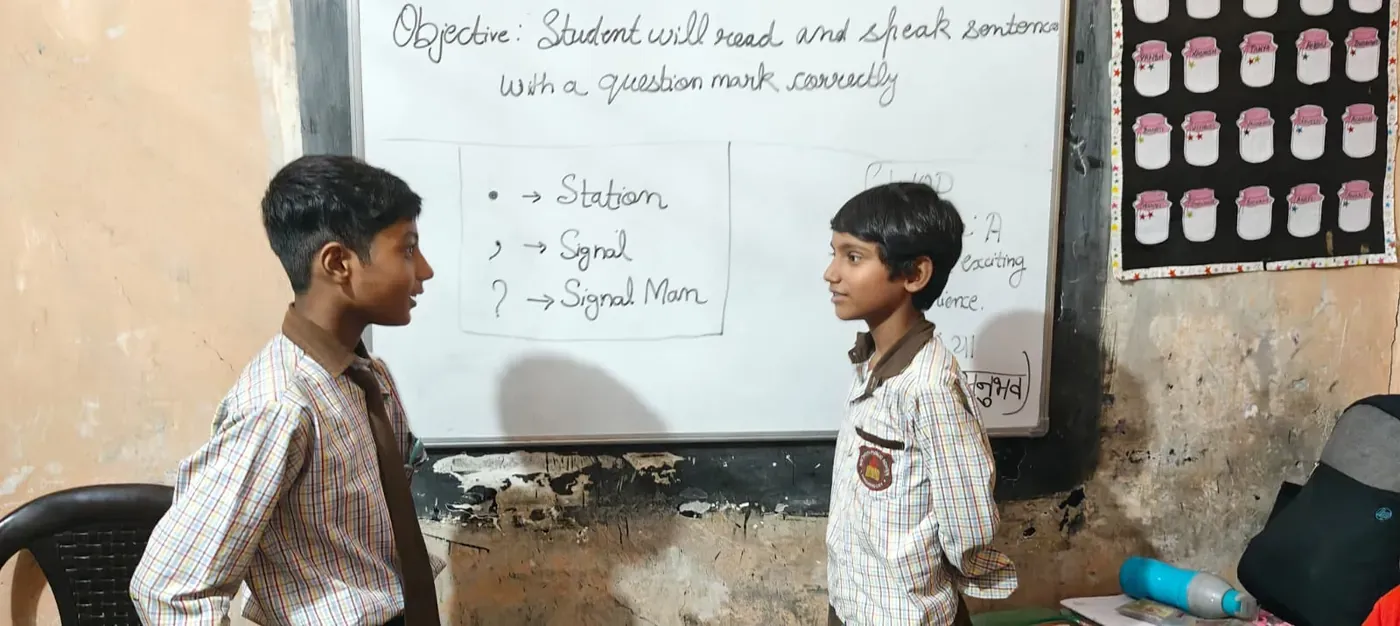
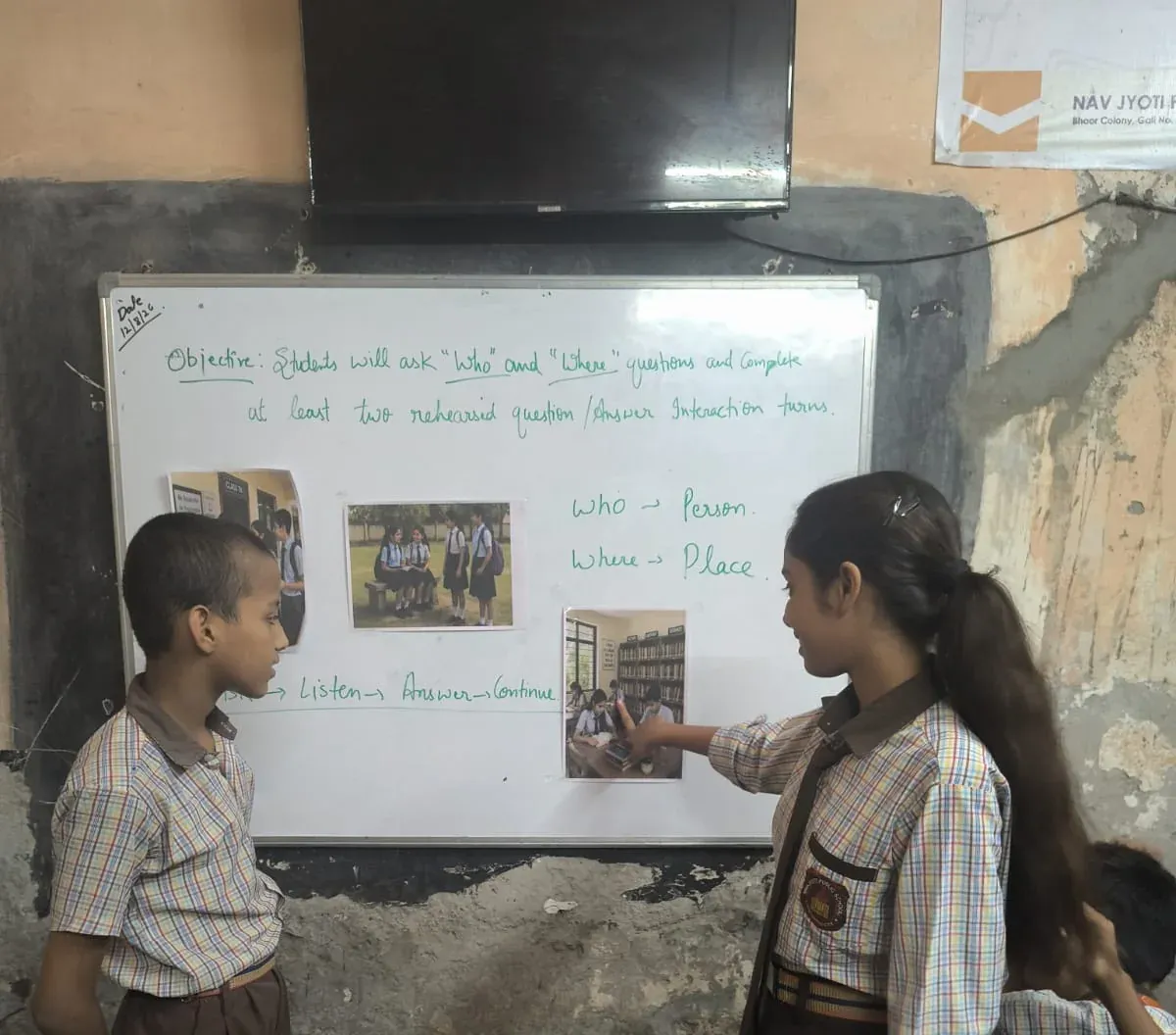
Two students speaking in front of a classroom board

Speaking in pairs

Classmates responding together at the board.
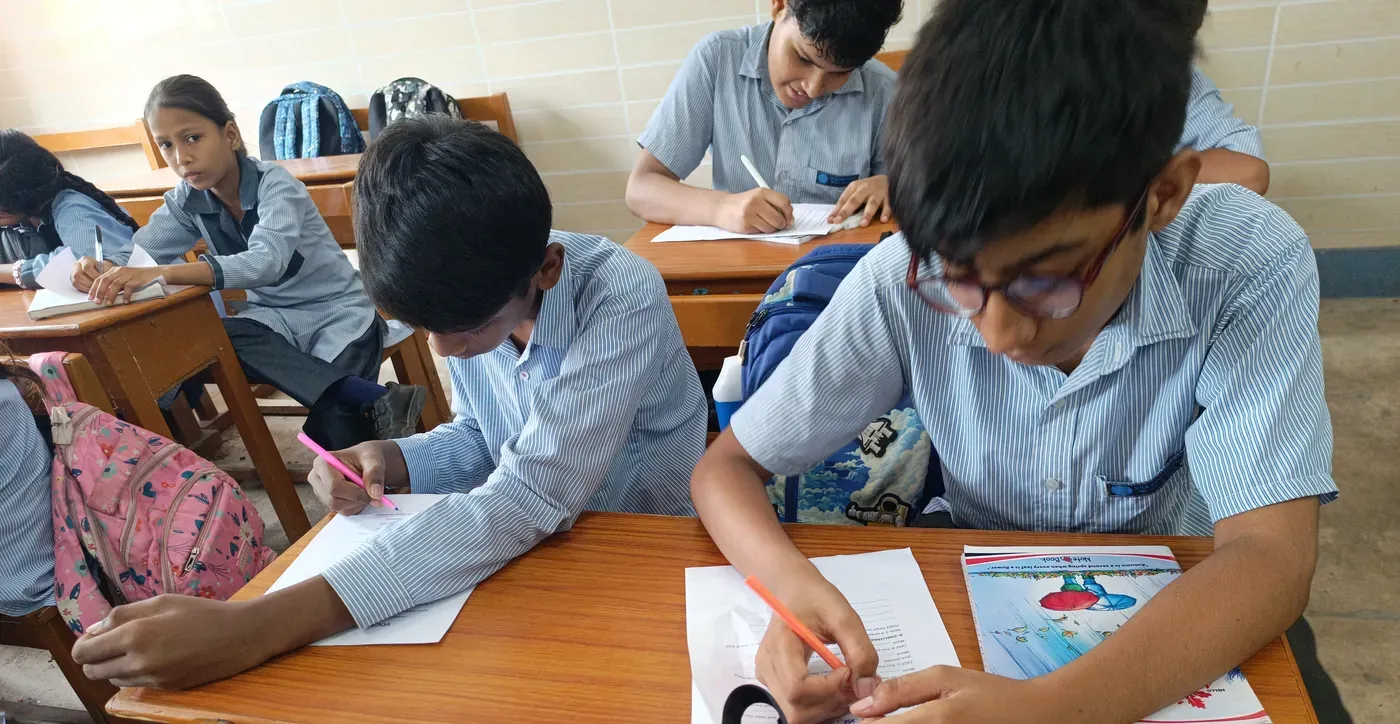
Students working with writing materials during a classroom activity

Writing in action

Students completing written classroom tasks.
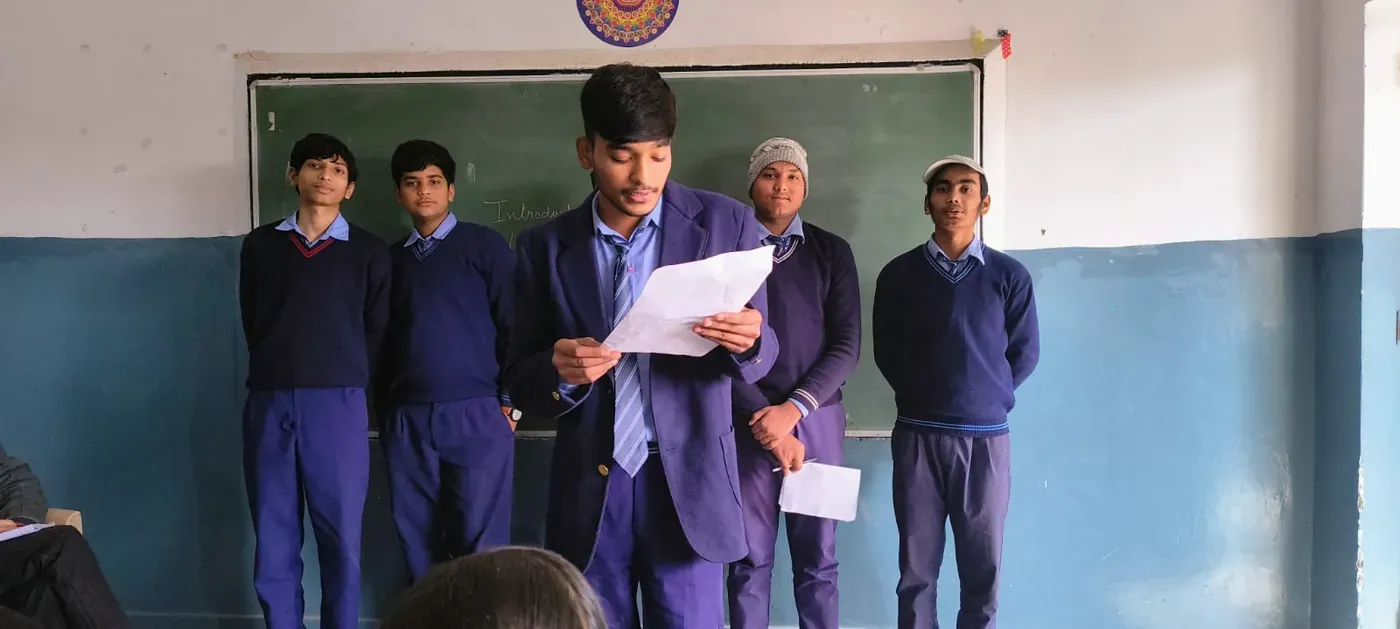
A student reading from a page while classmates stand nearby

Working with a speaking prompt

A student reading from a prepared prompt.
Flagship 02Parent Learning & Guidance Platform
Barrier:Awareness
Parents of India logo

Parents of India

Parents of India is Edspectrum Foundation’s parent-learning platform that brings credible, researched, and experience-led conversations to families.

It helps parents access trustworthy ideas around child development, learning, schooling choices, emotional development, confidence, home learning environments, and parenting practices.

The goal is not to tell parents what to do. The goal is to help parents make more informed choices for their children with clarity, confidence, and credible guidance.

Core Conversation Pillars

01Expert conversations
02Parent stories and lived experiences
03Child development discussions
04Schooling and learning conversations
05Accessible parenting content
06Practical reflections for home and family life

"The goal is not to tell parents what to do. The goal is to help parents make more informed choices for their children with clarity, confidence, and credible guidance."

Parents of India conversation studio
Parents of India Studio: Research-grounded conversations exploring real parenting dilemmas and developmental clarity.

Video Series & Dialogues

Accessible in Hindi & English

Public Access

Helping parents make informed choices through credible conversations on children, learning, development, and parenting.

From the video library

Conversations with parents and experts

Browse all videos on YouTube ↗
Parents of India YouTube thumbnail for a homeschooling conversation featuring Deepanshi JainFeatured conversation · HomeschoolingA Deep Dive into Homeschooling with Deepanshi JainWhat, why and how — a parent’s experience and choices around education.Watch the conversation ↗

Practice Evolution

Ecosystem Initiatives That Shaped Our Practice

Before Akshara and Parents of India became our current flagship programs, Edspectrum’s work across early childhood, content accessibility, school transformation, and capacity building helped shape how we think about children’s learning ecosystems.

These initiatives are not separate project memories. Each one helped us understand a different barrier in the child’s ecosystem and shaped the way we now design programs around awareness, access, and capacity.

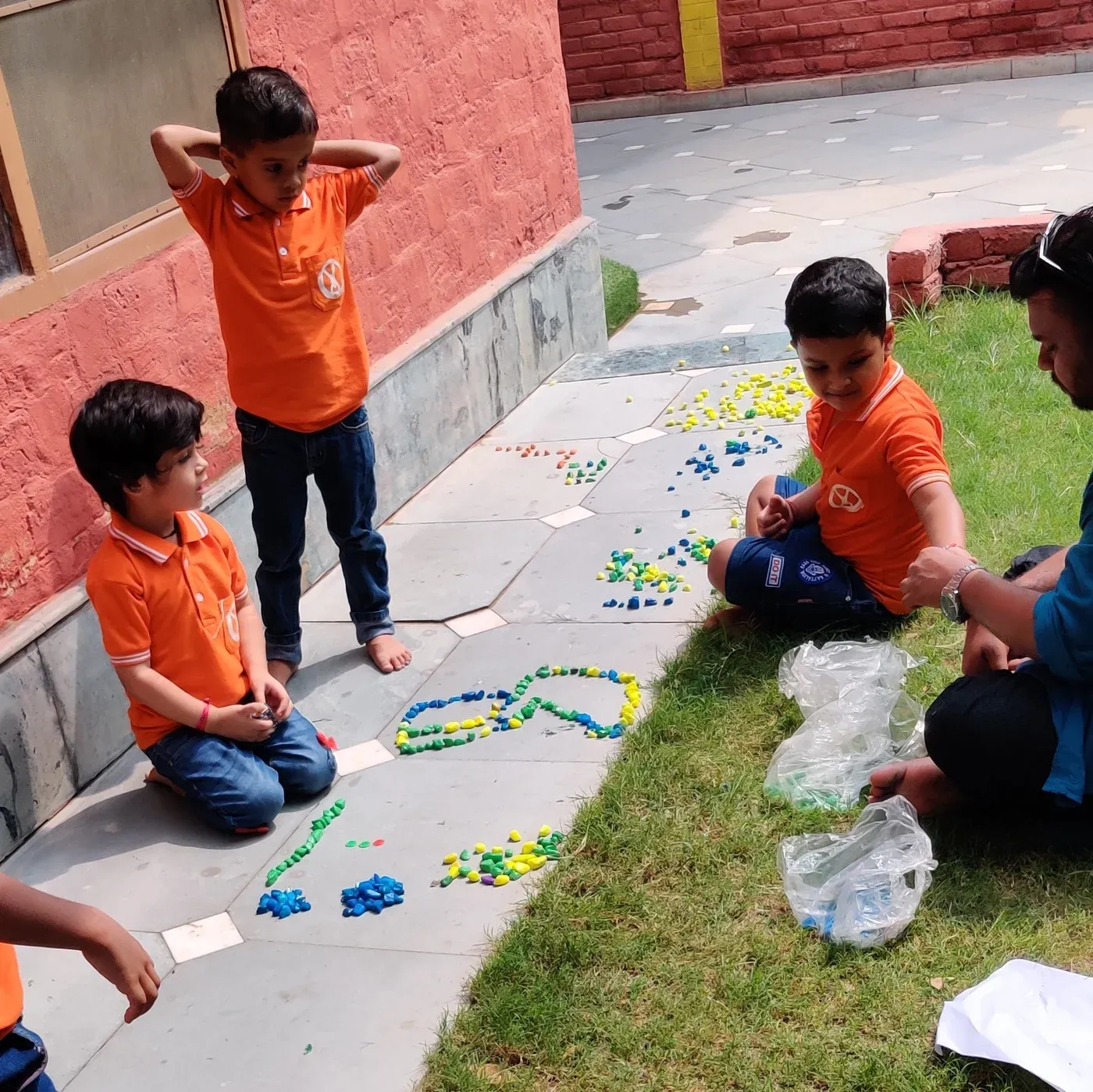
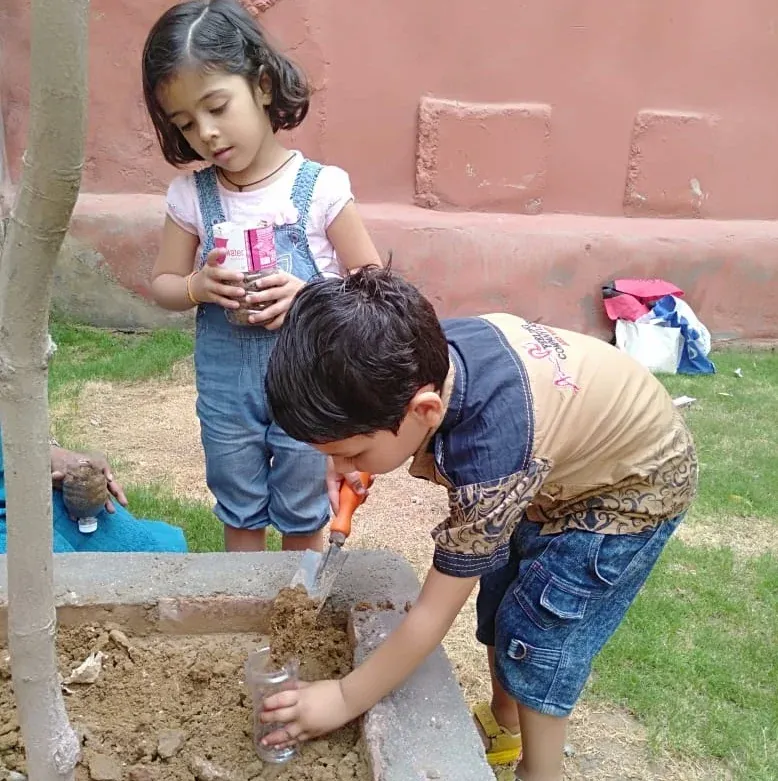
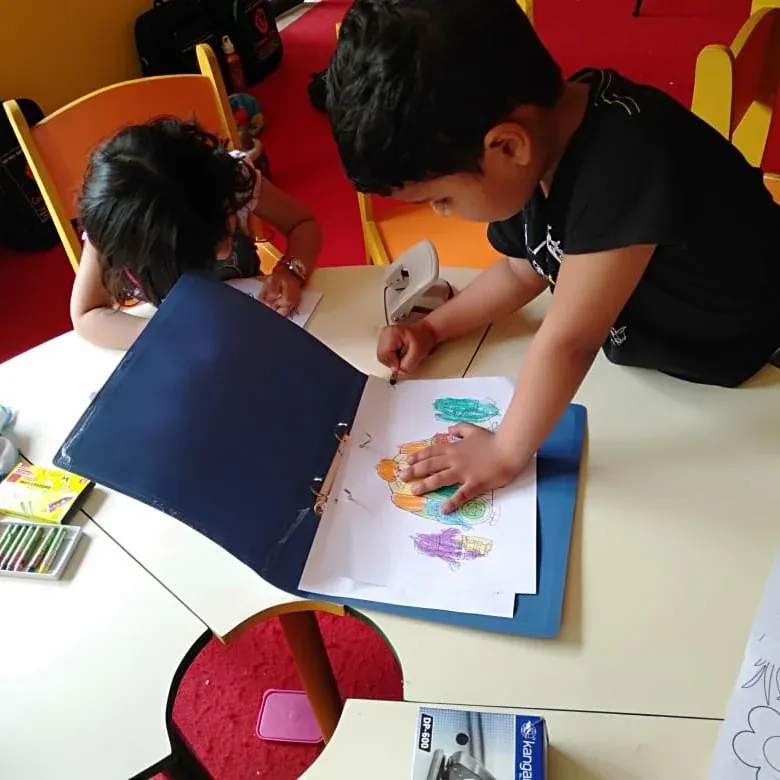
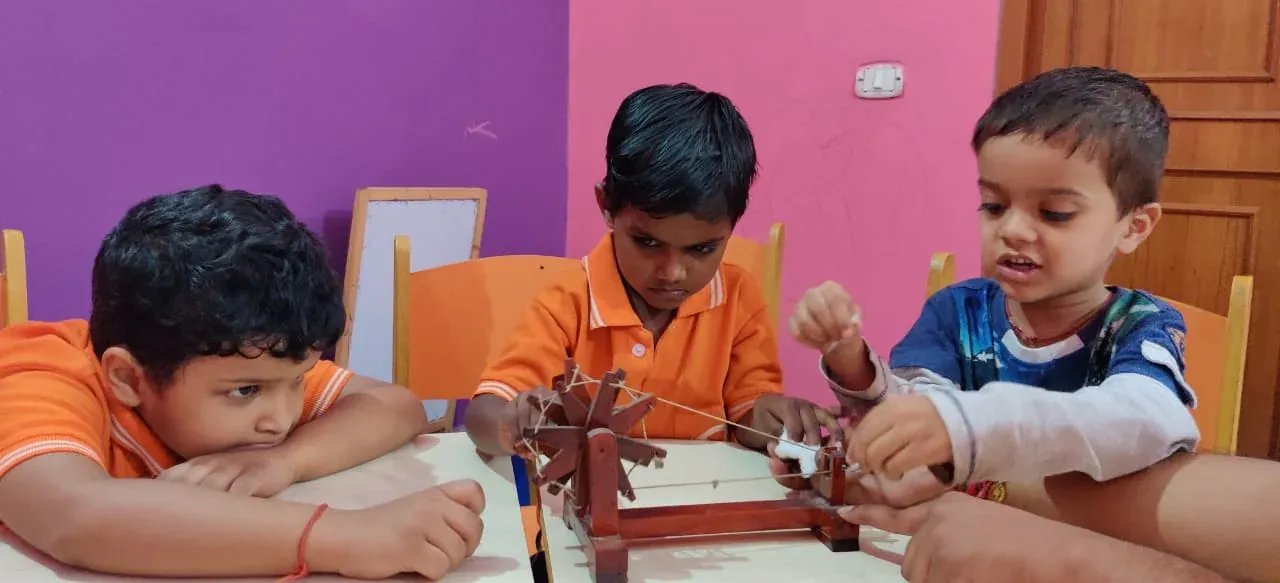
Children and an adult exploring colourful materials during an outdoor activity
AccessCapacity

Cartwheel School

Explore Cartwheel School on Instagram

Cartwheel School helped shape Edspectrum’s early childhood lens through child-centred learning, parent engagement, teacher capacity building, and researched practices inspired by Montessori, Waldorf, and democratic schooling.

What It Shaped in Our Practice

Early childhood development, play-based learning, parent engagement, teacher capacity, and respect for children’s pace, voice, curiosity, and well-being.

Mission Link

Cartwheel strengthened our belief that children need meaningful developmental and learning experiences from the early years, and that homes and schools must be equipped to support those experiences.

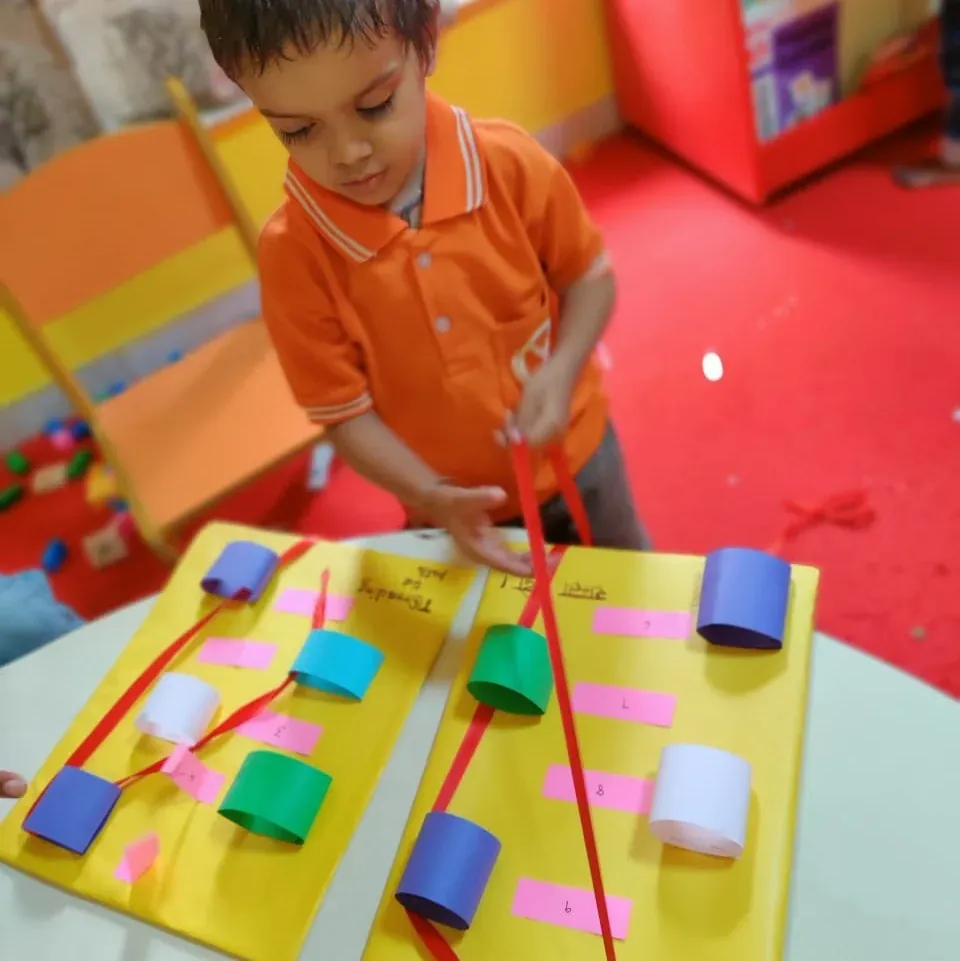
Early childhood learning that shaped our child-centred, physical approach to development and parent–school partnerships through sensory play, design, and life skills.

Project Setu initiative
AccessAwareness

Project Setu

Project Setu helped Edspectrum understand that information becomes useful only when people can understand, trust, and act on it in a language and format accessible to them.

What It Shaped in Our Practice

Local-language access, translation, transliteration, audio support, public awareness communication, and understanding language as an access barrier.

Mission Link

Project Setu connects to our mission by making credible information accessible and usable for communities, especially where language becomes a barrier to awareness, learning, health, or opportunity.

Language-access work that taught us how credible information must be usable in people’s real contexts.

School Transformation and Teacher Capacity Building initiative
Capacity

School Transformation and Teacher Capacity Building

School transformation work helped Edspectrum understand that meaningful learning depends not only on content, but on the adults, systems, and classroom practices that support children every day.

What It Shaped in Our Practice

Teacher development, classroom observation, feedback systems, curriculum design, parent-school engagement, and school-level implementation.

Mission Link

This work connects directly to strengthening schools so they can create more responsive, meaningful, and child-centred learning experiences.

Whole-school capacity building that shaped how we support teachers, leaders, and classroom practice.

AwarenessCapacity

Content and Capacity-Building Projects

Our content and capacity-building projects helped us design credible learning resources, awareness content, and skill-building experiences for students, women, youth, teachers, parents, and communities.

What It Shaped in Our Practice

Curriculum design, assessment-aligned resources, health awareness, campaign design, skilling content, and usable knowledge for different learner groups.

Mission Link

These projects strengthened our ability to design researched, evidence-based programs and conversations that build awareness, create access to usable knowledge, and strengthen people’s capacity to act.

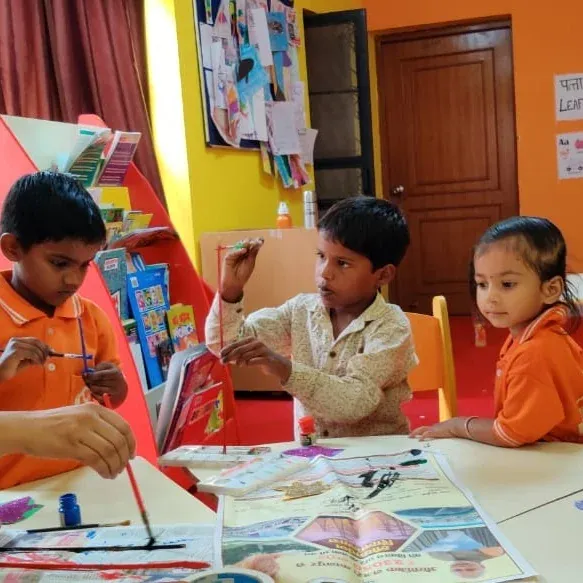
Children participating in an actual classroom learning session

Class Session

Demonstrating actual classroom implementation, collaborative child participation and usable learning resources in practice.

Resource and skilling work that built our ability to design credible programs for diverse learner groups.

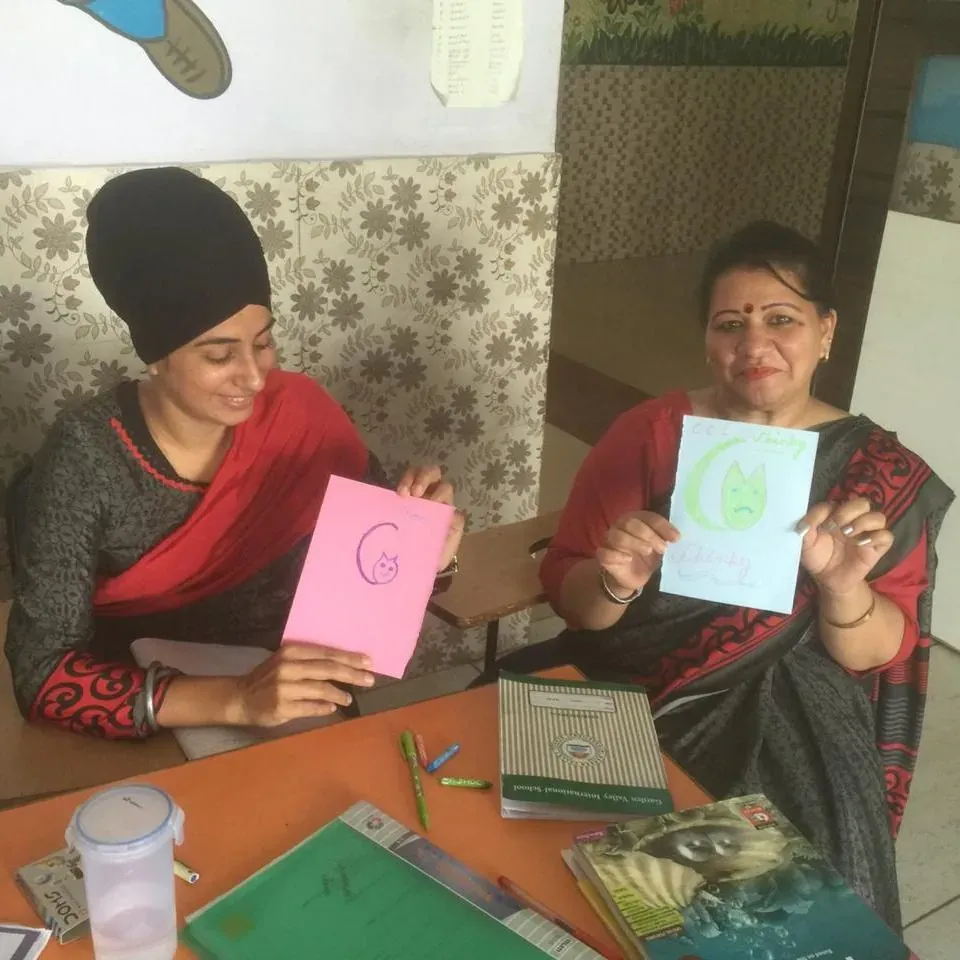
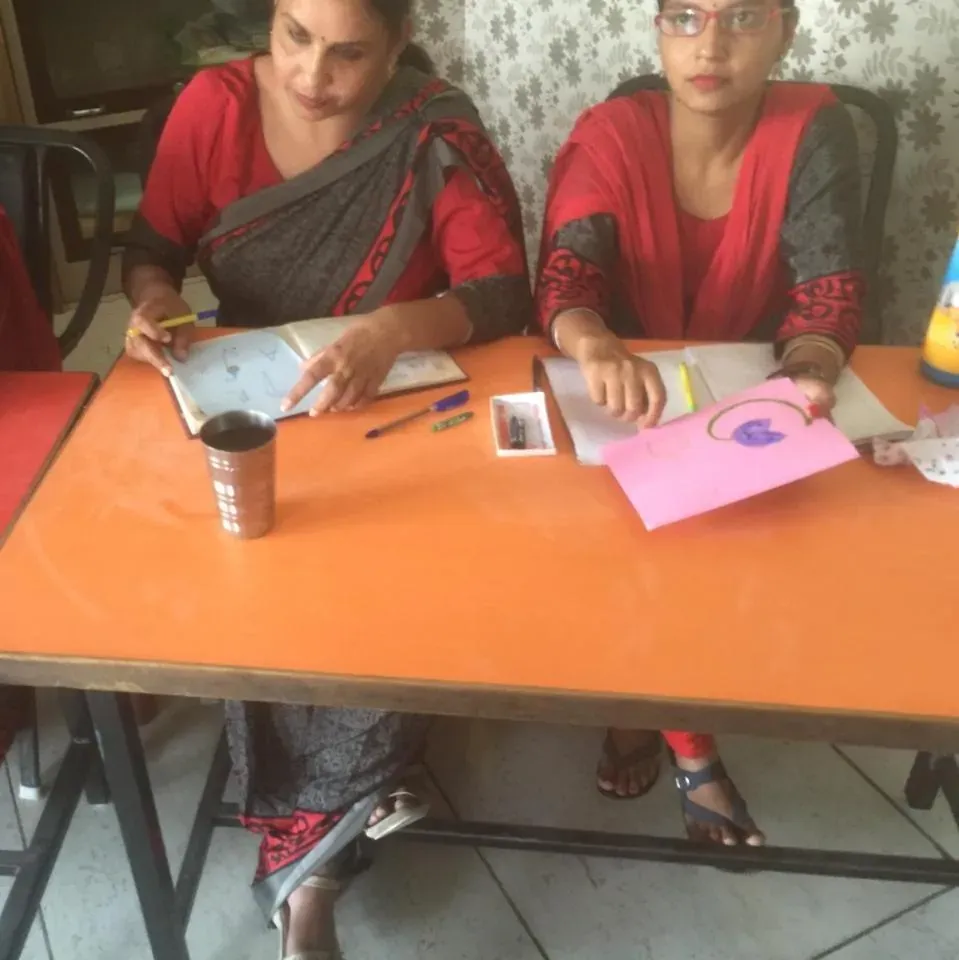
School transformation: photographs from earlier work · view photographs

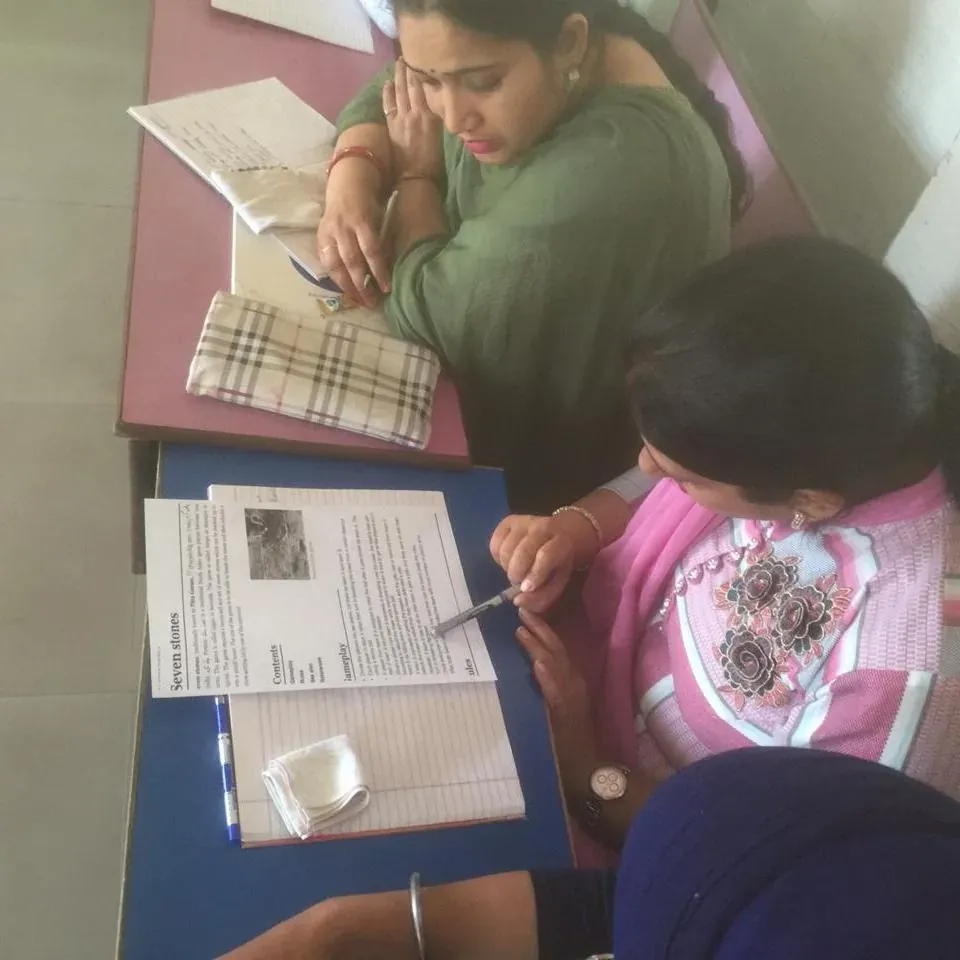
Archival educator-training moments from an earlier school-transformation initiative. Exact year and institutional context should be verified before adding a dated caption.

Educators drawing together at a workshop table

Hands-on educator activity

Educators completing a drawing activity.

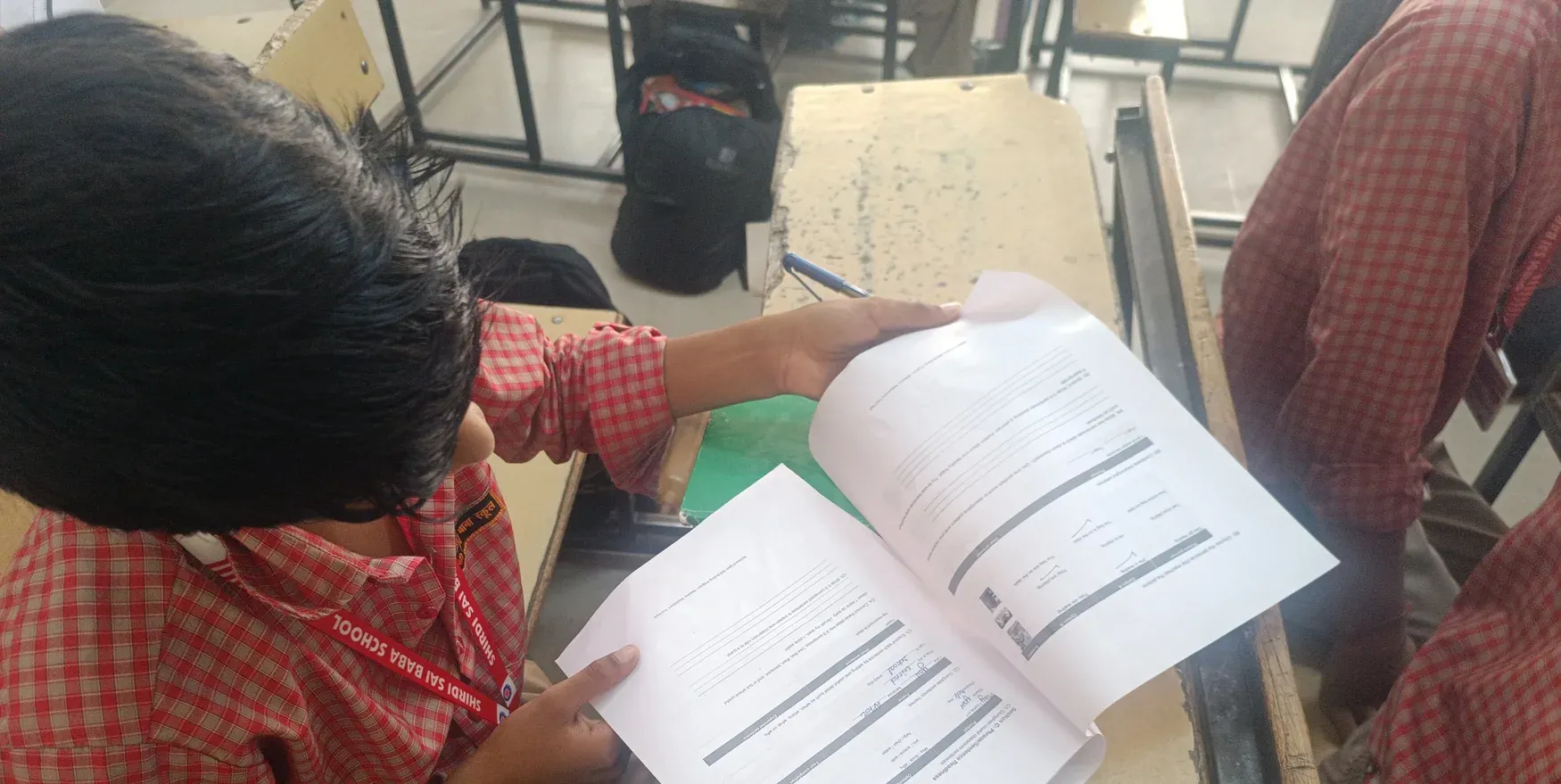
Educators studying printed learning materials

Reflecting on materials

Educators reviewing printed learning materials.

Earlier field experiences

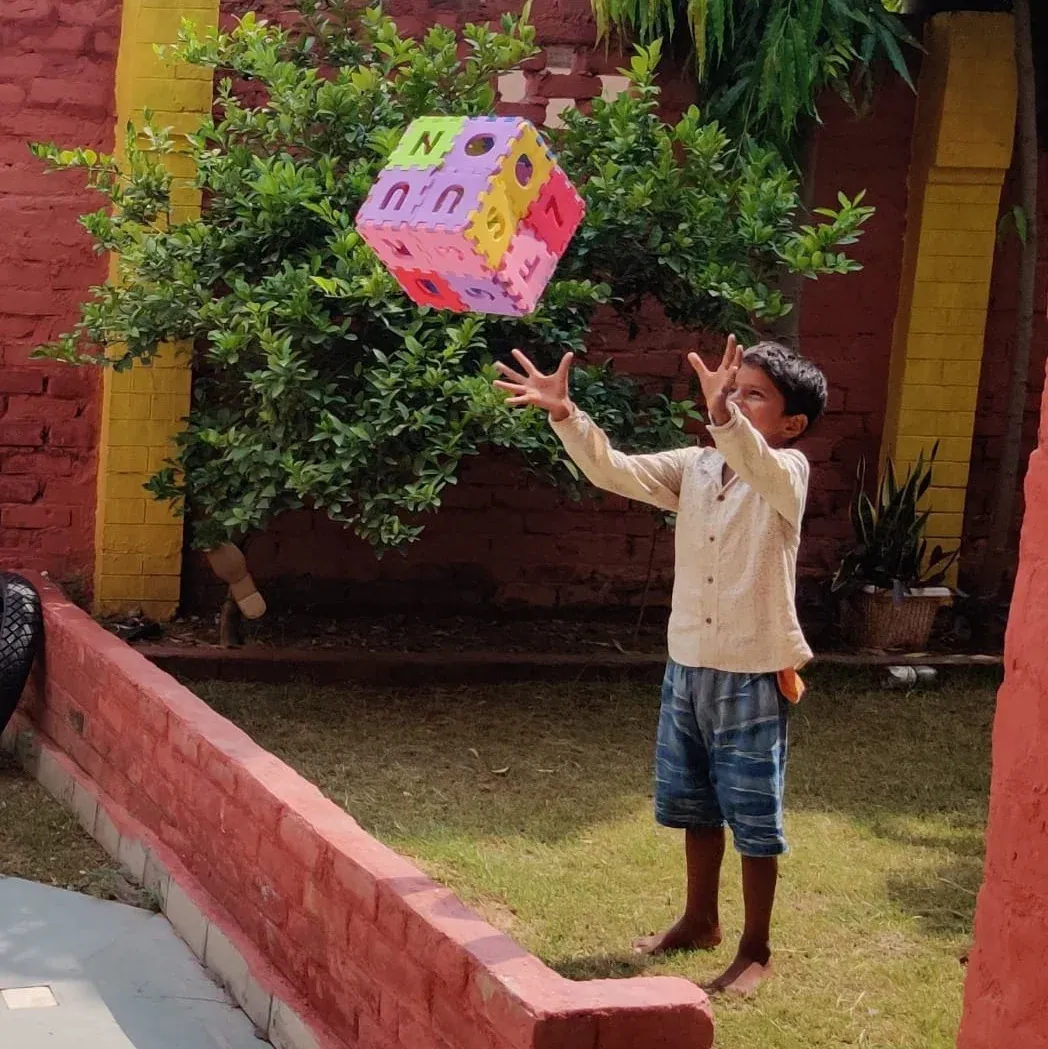
Images from earlier learning and outreach activities

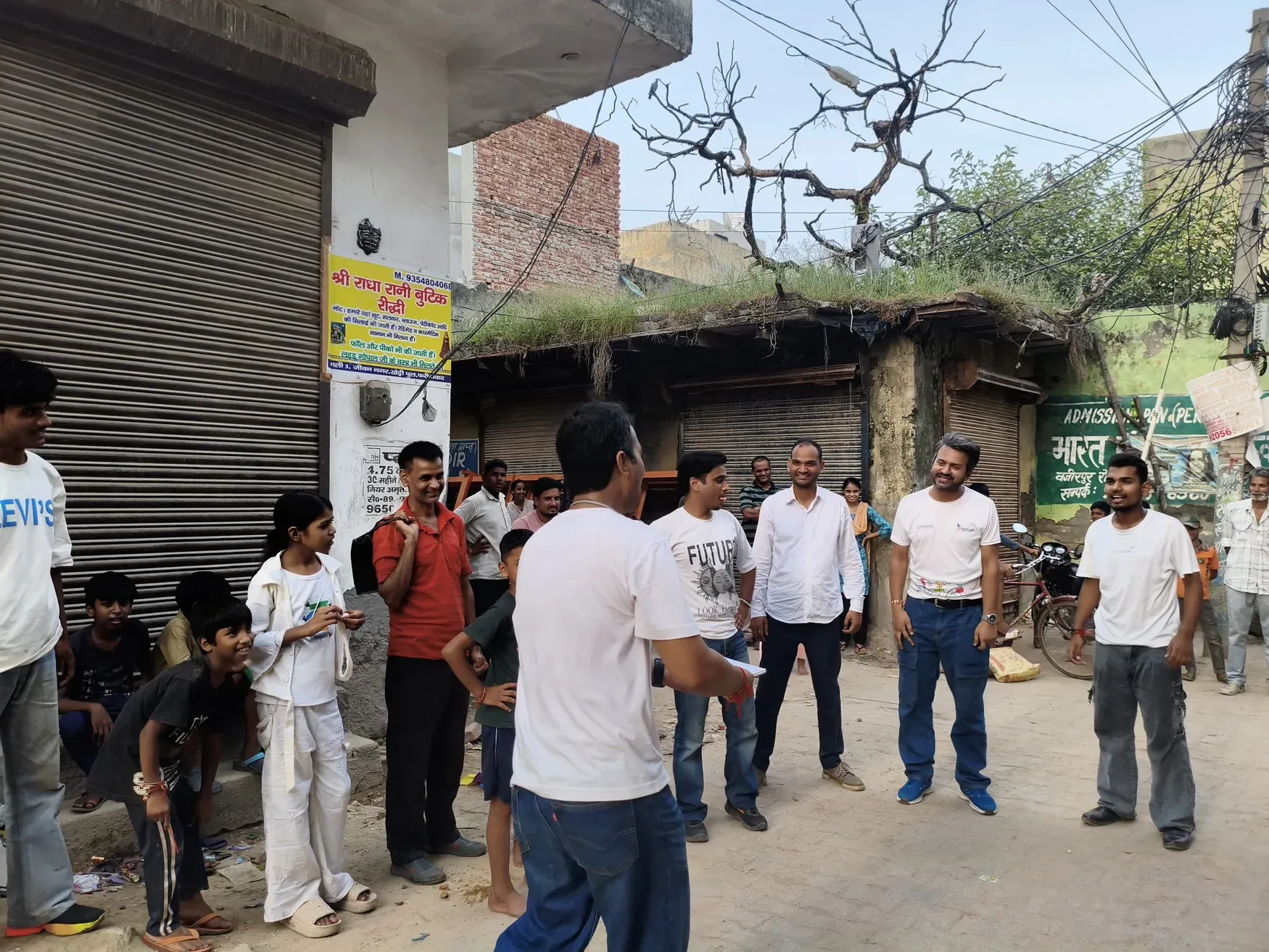
These photographs document earlier activities in Edspectrum's wider journey. They are not photographs of current Akshara classroom delivery.

Disciplined Execution

How We Work

We do not begin with activities. We begin with the problem, the people affected by it, and the system around them.

Our work is shaped through a disciplined process that brings together field realities, stakeholder needs, credible research, practical implementation thinking, and continuous learning.

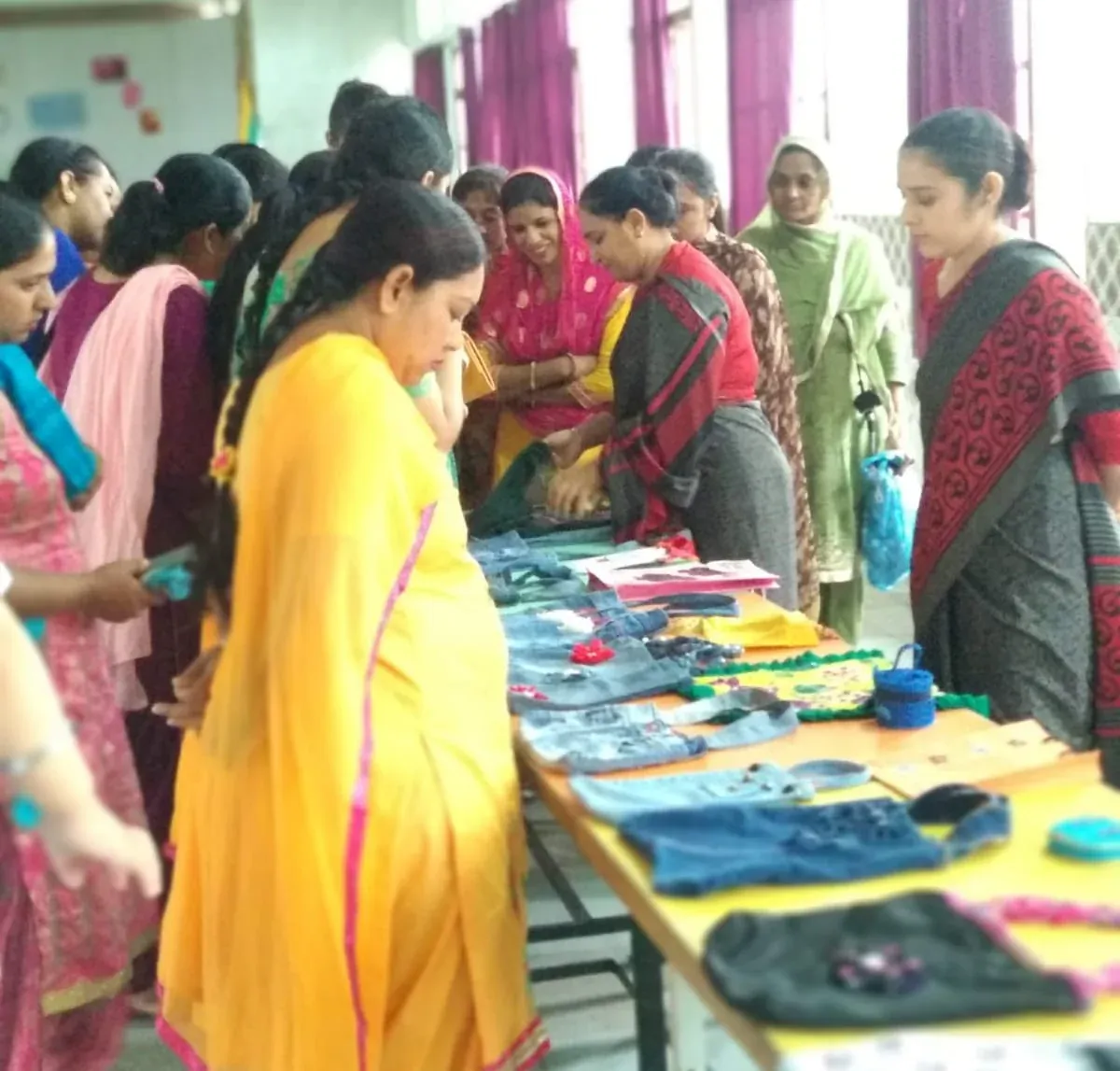
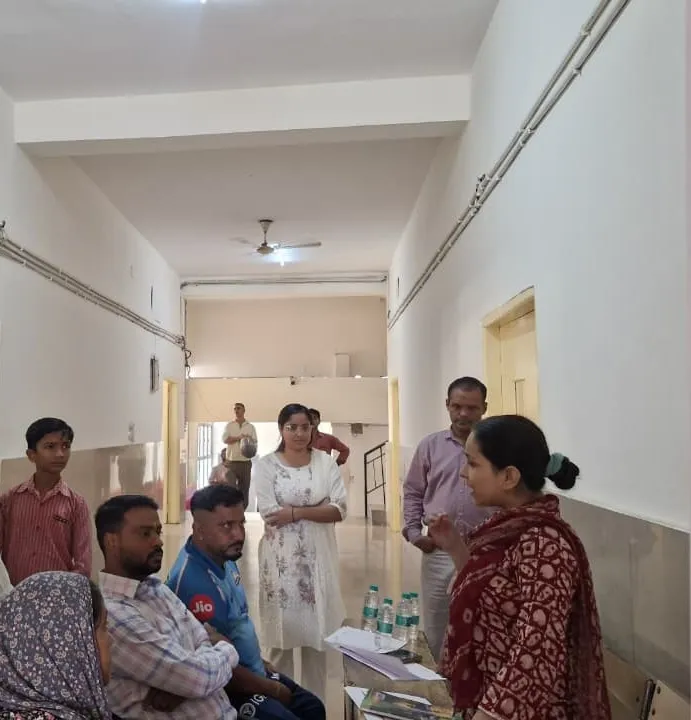
Educators and community members discussing school learning activities
01Listen
Implementation Cycle

Identify the real barrier by listening first

Our process begins by understanding what is actually stopping children, parents, or schools from accessing meaningful learning and growth.

What this looks like in practice:

Field conversations · School visits · Parent interactions · Student evidence · Classroom observations · Partner discussions

02Understand Context
Implementation Cycle

Study the context and what can realistically work

We do not design for an ideal world. We design for the actual schools, homes, and communities where the work has to happen.

What this looks like in practice:

Timetables · Student levels · Parent realities · School capacity · Team capacity · Funder expectations · Implementation constraints

03Design
Implementation Cycle

Design with evidence and alignment

After understanding the barrier and context, we design the response using credible research, field evidence, and practical implementation thinking.

We do not design programs around stakeholders. We design with them.

What this looks like in practice:

Curriculum design · Session plans · Parent engagement · Assessment tools · AI-IVRS support · Showcase design · Field systems · Stakeholder alignment

04Implement & Learn
Implementation Cycle

Implement, track, and improve

Once the intervention is designed, we implement it with clear roles, routines, timelines, and field ownership.

We use evidence not only for reporting, but for instructional decisions, program redesign, teacher support, parent follow-up, and partner communication.

What this looks like in practice:

Assessments · Trackers · Classroom evidence · Student work samples · Parent feedback · Teacher reflections · Field reviews · Program reports

How This Shows Up in Akshara

What This Disciplined Process Looks Like in Akshara

In Akshara, this means identifying the English access gap, studying student levels and school routines, designing classroom and AI-IVRS practice, aligning parents and schools, and tracking progress through assessments, student work, speaking calls, showcases, and family outreach.

Students presenting their work at an Akshara learning showcase
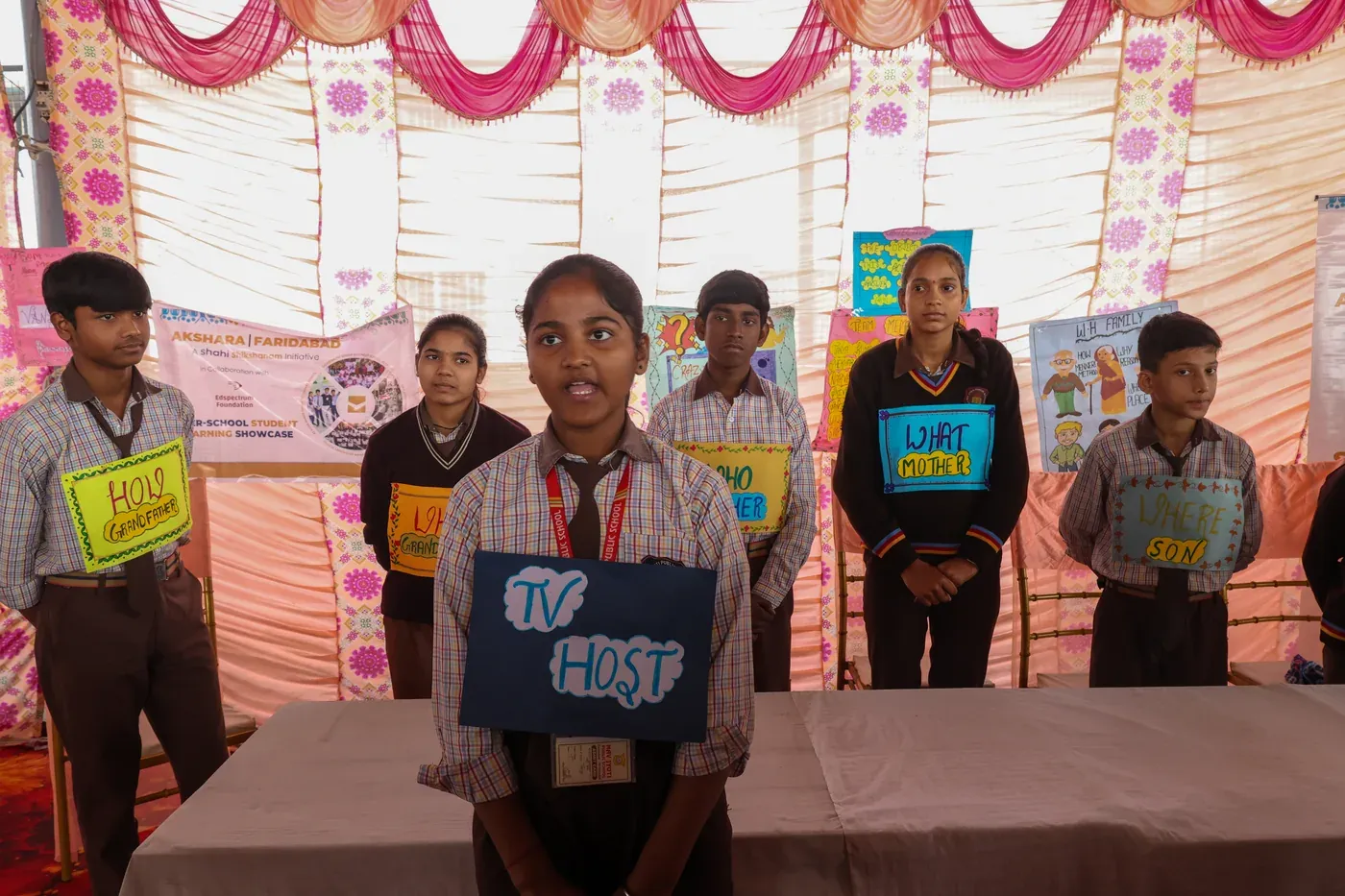
Stage 04 Showcase: Students turning classroom practice into public expression before peers and teachers.

Impact Logic Model

Theory of Change

Children grow better when homes are informed, schools are responsive, and children have real access to meaningful learning opportunities. That is why Edspectrum Foundation works through three levers: awareness, access, and capacity.

Core Conviction

"Our Theory of Change is simple: when parents receive credible awareness, children receive meaningful access, and schools receive structured support, children are more likely to build confidence, skills, visibility, ownership, and readiness for life."

Edspectrum brings together field listening, research-led design, school-based implementation, parent awareness, and continuous evidence use to respond to these barriers.

  1. The Barrier

    Problem

    Children face hidden barriers in language, confidence, expression, home support, school systems, and access to meaningful opportunities.

    Parents care deeply about their children’s future, but often do not have access to credible guidance on what children need for learning, development, confidence, and life readiness.

  2. Our Response

    Levers

    • Awareness

      Credible guidance that helps adults around children make informed choices.

    • Access

      Meaningful opportunities children and families can actually use.

    • Capacity

      Skills, confidence, learning readiness, and stronger support systems.

  3. What We Do

    Interventions

    Edspectrum designs and delivers credible, researched, and evidence-based programs that build awareness, access, and capacity.

    In Akshara, this theory is already being tested through classroom sessions, AI-IVRS practice, family outreach, student showcases, and Baseline-to-Endline learning tracking.

    Parent learningEnglish skill-buildingSchool-home practiceAI-IVRS speaking practiceClassroom instructionStudent showcasesSchool & teacher supportEvidence-based program design
  4. What We Deliver

    Outputs

    What we deliver

    • Children

      Structured learning and practice opportunities.

    • Parents

      Credible guidance, conversations, and awareness-building content.

    • Schools

      Structured program support, curriculum implementation, assessment tools, teacher support, and parent engagement structures.

  5. What Changes

    Outcomes

    What changes because of the work

    • Children

      Skills, confidence, visibility, communication, learning readiness, and ownership.

    • Parents

      Greater awareness and stronger ability to make informed choices, ask better questions, and support children at home.

    • Schools

      Structured support, evidence, routines, and engagement models that help schools respond better to children’s learning needs.

    Akshara example

    • Hesitation → participation
    • Listening comfort → speaking attempts
    • Classroom silence → visible expression
    • English fear → English ownership
  6. What We Are Working Toward

    Long-Term Impact

    Stronger readiness for life

    Children grow into confident adults who are better prepared to make informed choices for their work, relationships, health, family, and lives.

    Homes and schools become stronger ecosystems for children’s learning and development, with better awareness, better access, and stronger capacity to support children over time.

Next Step

See a barrier we can solve together?

If you see a gap in awareness, access, or capacity affecting children’s learning and development, we would be glad to explore how Edspectrum Foundation can collaborate with you.