
More children receive meaningful English access
Students who currently have limited opportunities to practise English receive structured support across listening, speaking, reading, and writing.
Partner With Us
Akshara has shown that when children receive structured classroom instruction, repeated speaking practice, reading and writing support, family engagement, assessment-led teaching, and opportunities to use English publicly, meaningful learning movement becomes possible.
The next challenge is not simply identifying the English-access gap. It is ensuring that more children receive the depth, continuity, and support required to overcome it.
A partnership with Edspectrum Foundation helps extend this connected learning ecosystem to more government and low-income school communities while protecting the quality, evidence, and accountability required for lasting change.
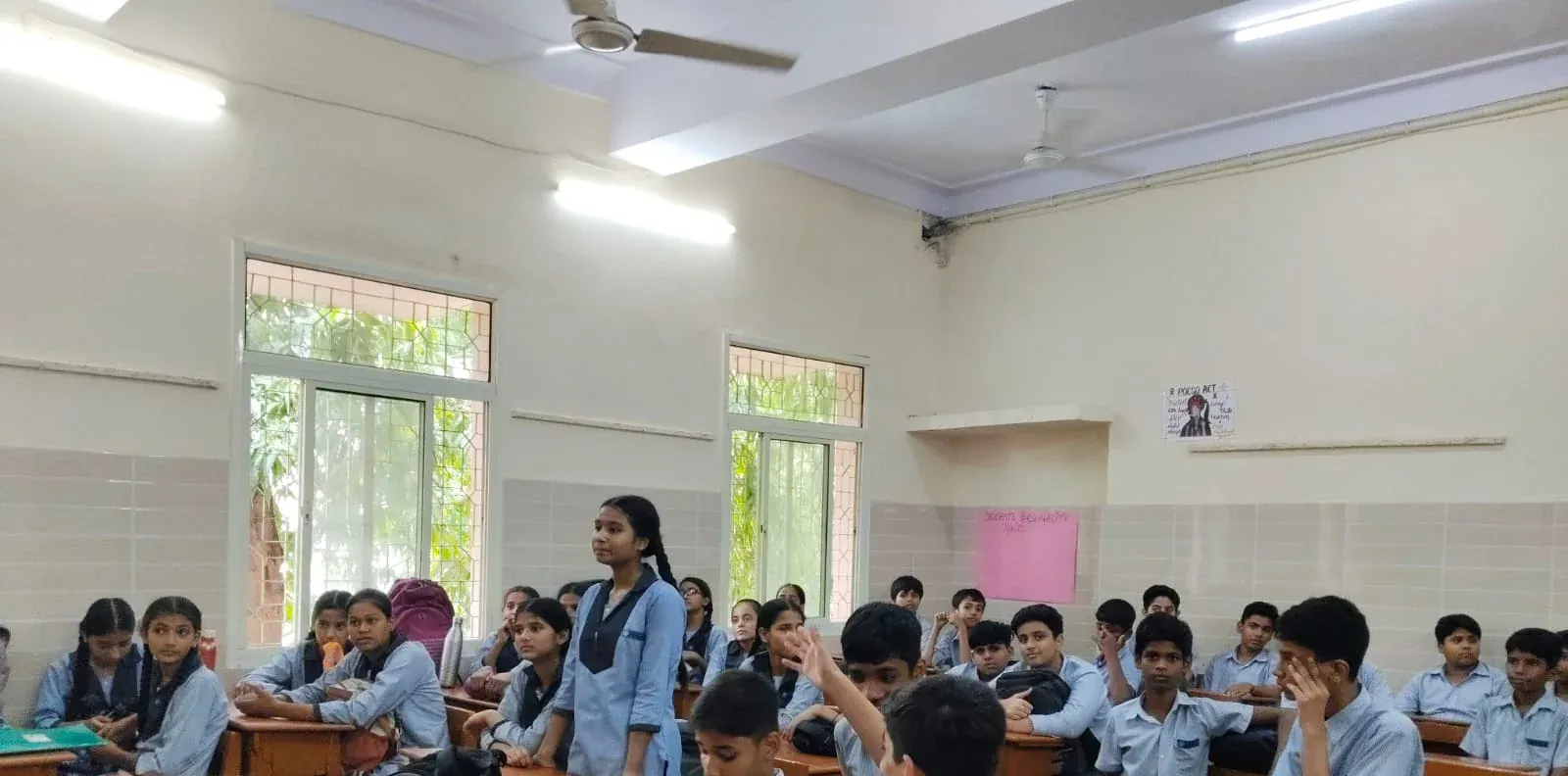
More children receive meaningful English access
Students who currently have limited opportunities to practise English receive structured support across listening, speaking, reading, and writing.
Practice continues beyond one classroom period
Classroom instruction is reinforced through teacher-led speaking calls, AI-IVRS practice, family engagement, and differentiated learning opportunities.
Teaching responds to actual student levels
Baseline, midline, endline, classroom evidence, and student work help teachers understand learning needs and adapt instruction.
Children use English visibly and meaningfully
Students receive opportunities to answer, explain, write, present, and participate through classroom activities and public learning showcases.
Partners receive credible evidence of progress
Partnerships are supported through implementation data, learning assessments, school-level insights, field evidence, reports, and stories of change.
The transformation your partnership supports
Your partnership does not only fund English classes. It helps build the school, home, technology, assessment, and support systems that make sustained English learning possible.
Partnership Pathways
Different partners bring different priorities, resources, and capabilities. Some want to extend complete learning programs to more children. Others want to strengthen academic quality, informed parent support, technology, or evidence.
Edspectrum Foundation structures partnerships around the transformation a partner wants to make possible. Every partnership strengthens one or more of our core levers: Awareness, Access, and Capacity.
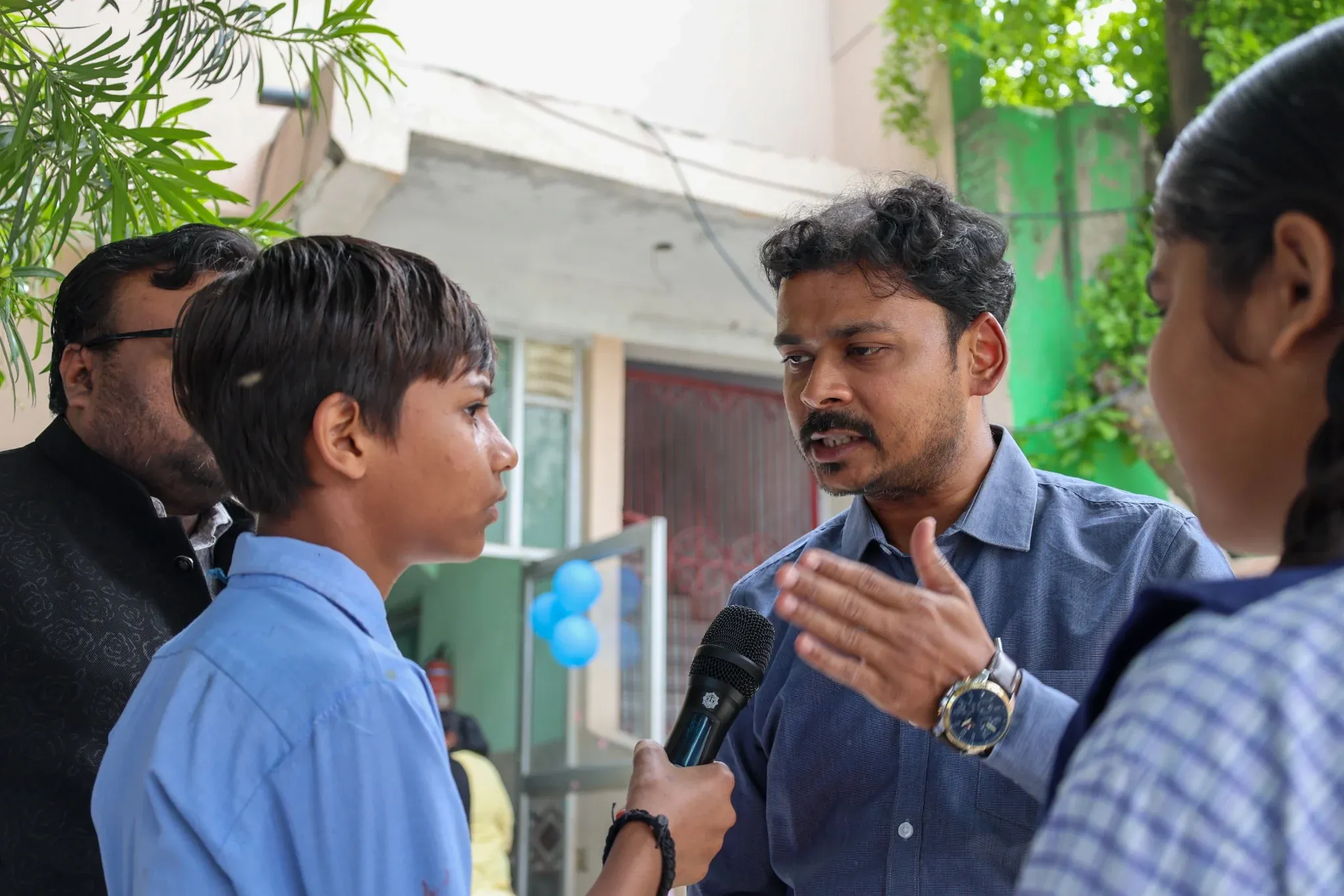
Help take the complete Akshara English Skill Building Program to more children and school communities where meaningful English exposure and practice remain limited.
Transformation enabled
More children receive sustained opportunities to listen, speak, read, write, participate, and express their learning with growing confidence.
A partnership may support
Relevant partners
CSR partners, foundations, HNI donors, school networks, and institutional funders.
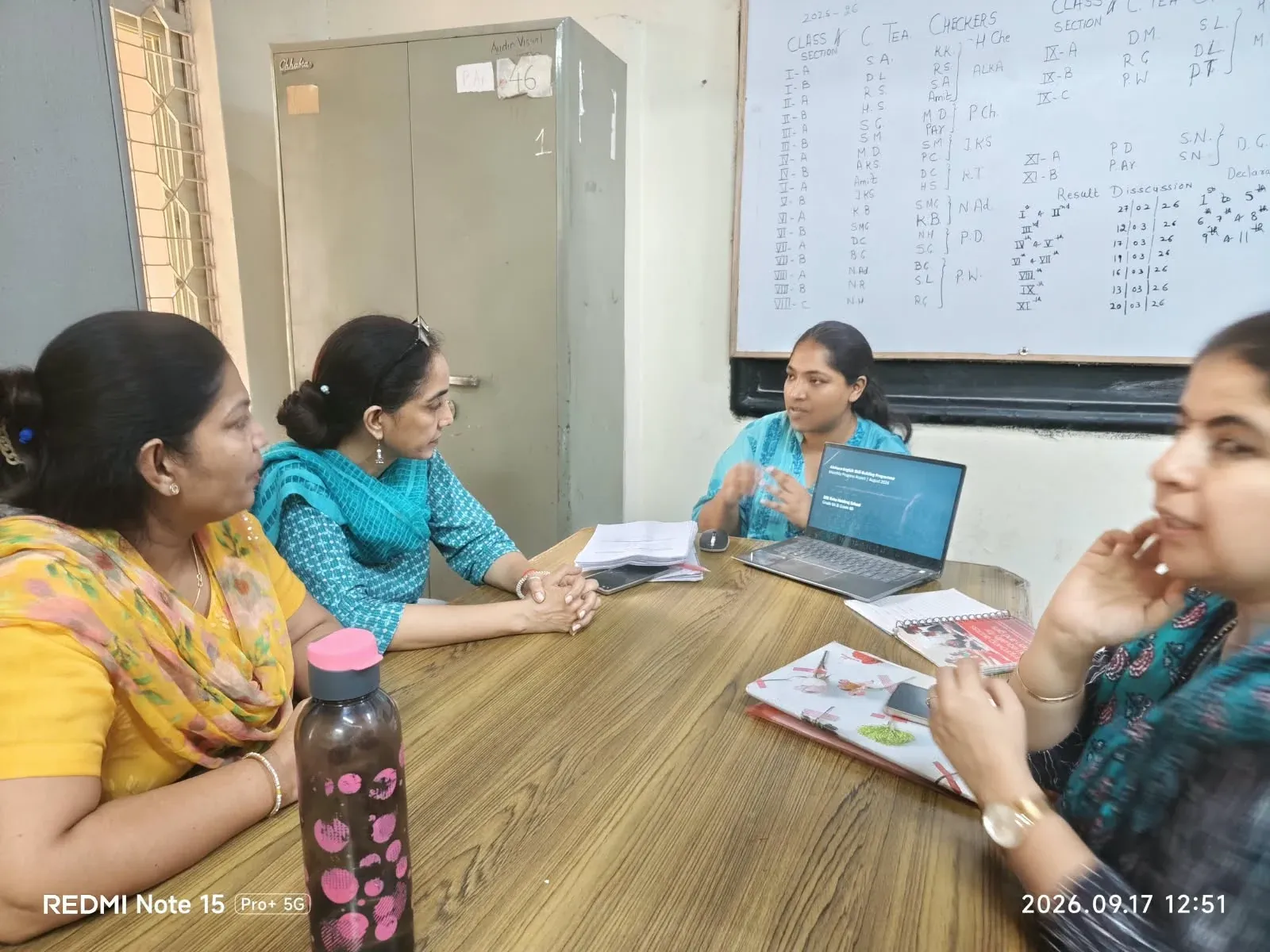
Help strengthen the academic and instructional quality of Akshara so that students at different learning levels receive support suited to their actual needs.
Transformation enabled
Teaching becomes more responsive, weaker learners receive stronger support, and children progress through clearer pathways across listening, speaking, reading, and writing.
A partnership may support
Relevant partners
Education foundations, CSR education portfolios, academic institutions, pedagogy experts, and capacity-building partners.
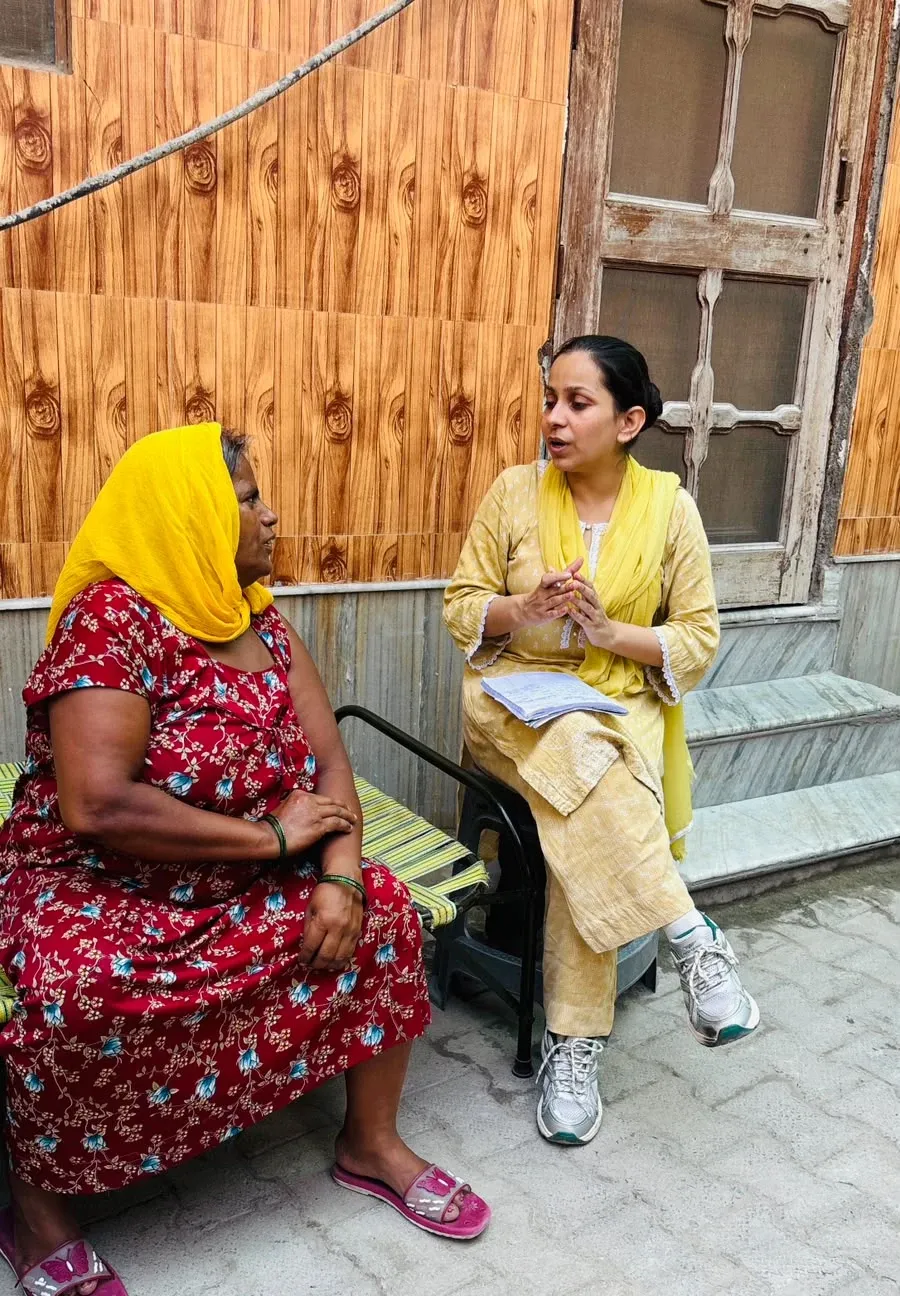
Help parents understand what children need for learning, confidence, language development, and future readiness while ensuring that practice continues beyond the classroom. This pathway can bring together Parents of India, Akshara’s family-engagement work, home visits, parent meetings, and accessible learning guidance.
Transformation enabled
Parents become better informed, children receive stronger encouragement and continuity at home, and learning becomes less dependent on one classroom period.
A partnership may support
Relevant partners
Foundations, family-focused CSR programs, HNI donors, media and communication partners, schools, and community institutions.
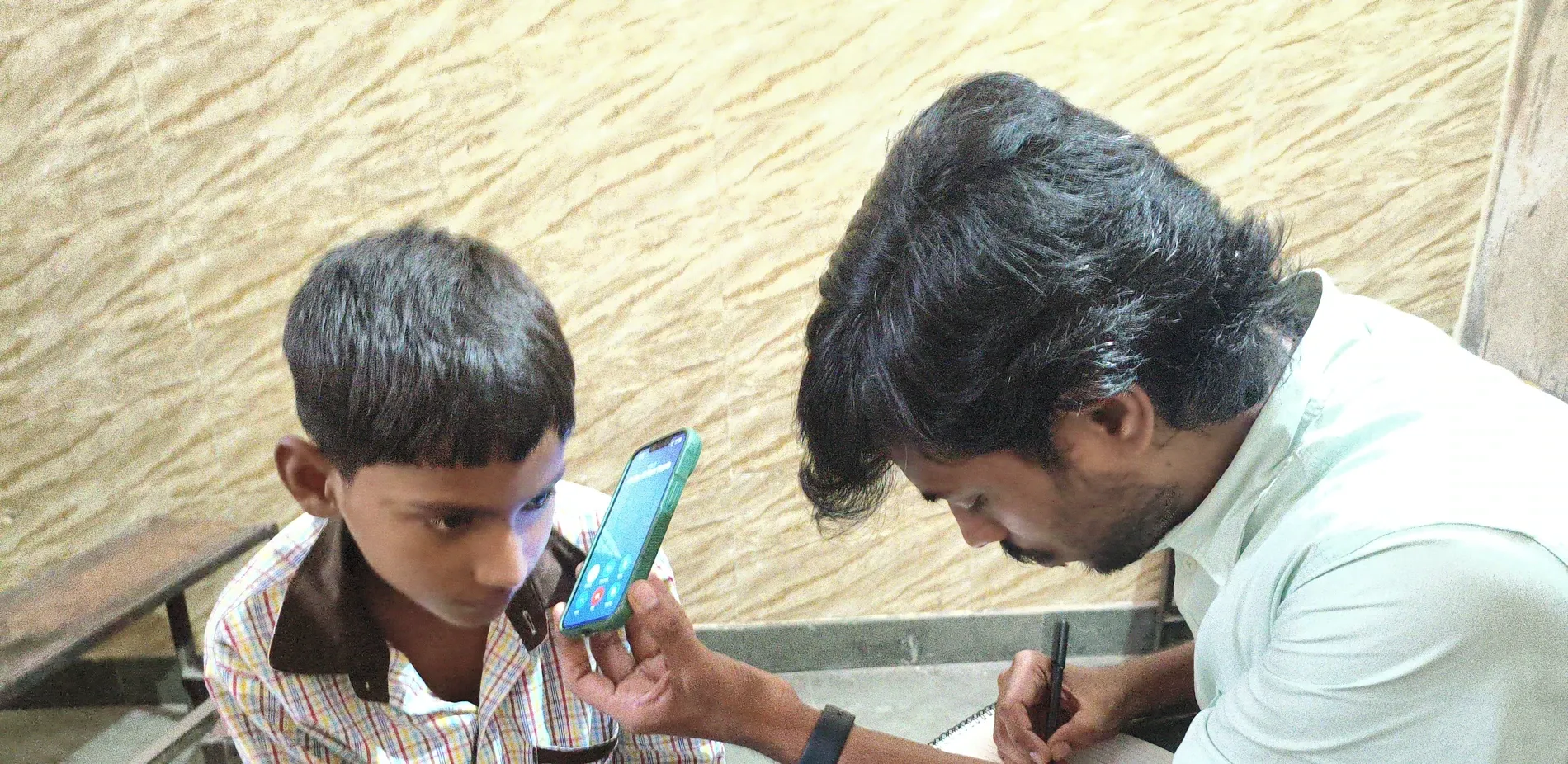
Help Edspectrum test, improve, and document systems that can expand learning opportunities without compromising quality or responsiveness to children’s real contexts.
Transformation enabled
Program decisions become more evidence-led, technology responds to actual access constraints, and effective practices become stronger, more accountable, and more capable of responsible scale.
A partnership may support
Relevant partners
Technology companies, pro-bono experts, research institutions, CSR innovation portfolios, foundations, and data partners.
How We Partner
Edspectrum Foundation works with partners whose priorities align with the barriers we address and the transformation our programs are designed to create.
We begin by understanding the partner’s intended social outcome, geography, communities, timeline, and accountability expectations. We then determine whether these priorities fit one or more of Edspectrum’s established partnership pathways.
The implementation scope can be contextualised, but the core learning model, quality standards, evidence expectations, and child-centred outcomes remain protected.
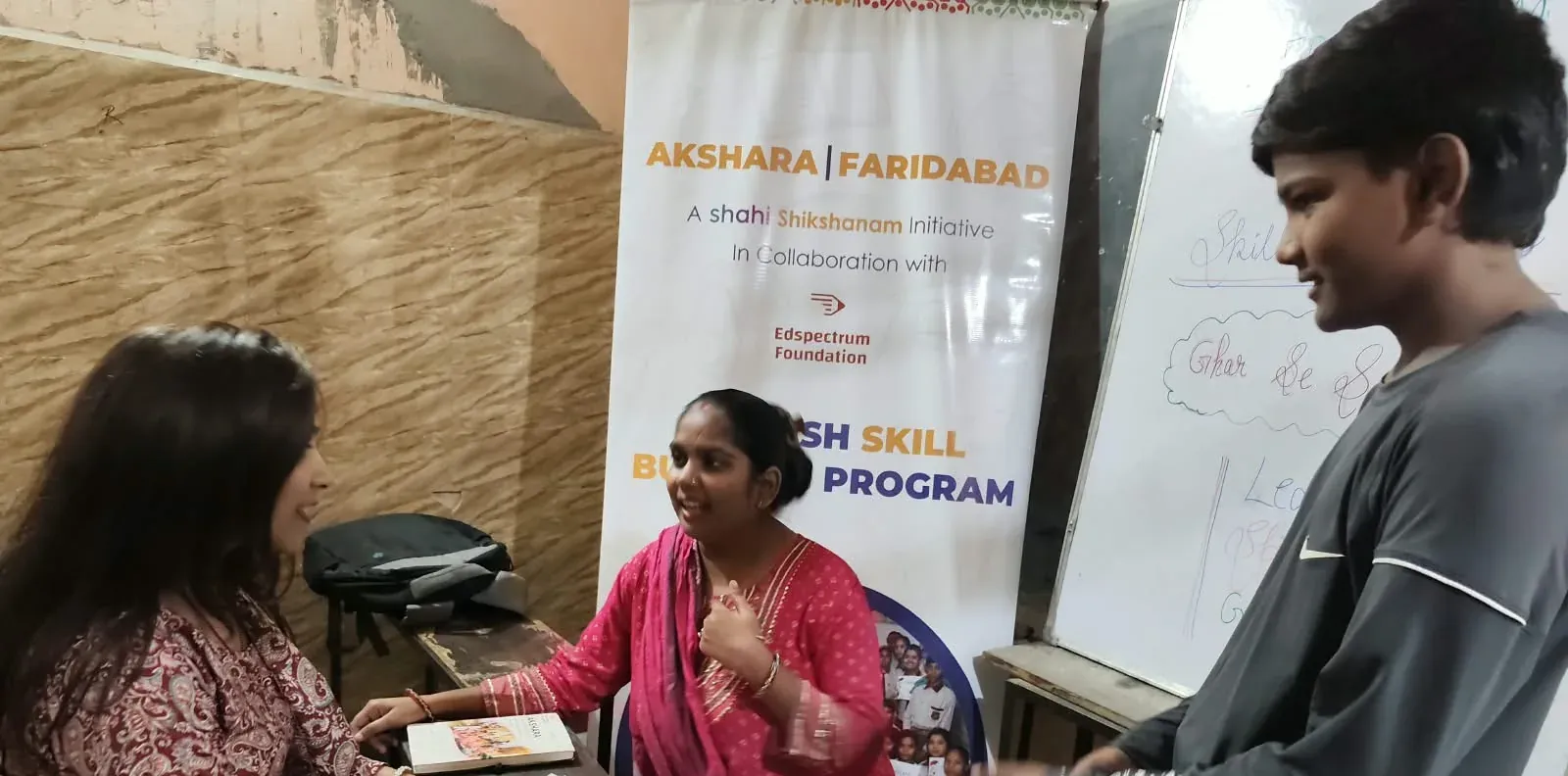
We begin by understanding the partner’s intended social outcome and the conditions around it. The purpose of this conversation is to identify genuine alignment—not to force an unsuitable partnership.
Together, we identify which established transformation pathway best fits the partner’s priorities. Where no meaningful fit exists, Edspectrum remains transparent rather than redesigning the program merely to secure funding.
Once alignment is established, the scope reflects the partner’s context while remaining within Edspectrum’s academic, operational, ethical, and evidence standards.
Edspectrum implements the agreed work through trained teams, structured academic systems, school coordination, family engagement, technology-supported practice, and regular evidence tracking. Partners receive visibility through agreed progress updates, governance discussions, implementation data, student-learning evidence, field documentation, and honest communication about emerging challenges.
At agreed stages, we examine the evidence and use it to strengthen implementation. Evidence may improve support, sequencing, or contextual delivery; it should not be used to lower the intended outcomes or remove essential parts of the model merely for convenience.
Partnership Principle
Partner priorities shape where and at what scale we work. Student evidence and field realities shape how implementation improves. Edspectrum’s mission, core model, quality standards, and accountability commitments remain protected.
Accountability Promise
Partners receive defined outcomes, clear responsibilities, regular implementation visibility, credible evidence of learning and participation, honest reporting of challenges, and evidence-led recommendations for the next stage.
What Partners Receive
A partnership with Edspectrum Foundation is supported by clear outcomes, defined responsibilities, regular review systems, and evidence from implementation.
Partners are not expected to wait until the end of the program to understand what is happening. They receive structured visibility into delivery, learning movement, field realities, emerging risks, and the decisions being taken to strengthen the work.
At the beginning of the partnership, we establish the scope and outcomes so there is clarity before implementation begins.
Partners receive agreed implementation visibility. The frequency and format are agreed during partnership design.
Depending on the partnership scope, partners receive learning and impact evidence that is used for both accountability and program improvement.
Partnerships include an agreed review structure involving relevant Edspectrum and partner representatives. These meetings support shared responsibility without transferring academic control away from Edspectrum’s evidence-led program systems.
Partners receive financial information aligned with the agreement. The exact requirements depend on the partnership type and statutory obligations.
Where appropriate and agreed, partners may receive responsible visibility and engagement opportunities. Visibility must protect children’s dignity, privacy, safeguarding, and learning experience. It should never interrupt implementation or turn children into promotional objects.
Our reports do not present only what went well. Partners receive an honest view of learning, barriers, and recommendations for the next stage.
Partnership Accountability Promise
Partners receive clear outcomes, regular implementation visibility, credible learning evidence, financial accountability, responsible engagement opportunities, honest reporting of challenges, and evidence-led recommendations for the next stage.
Who Can Partner With Us
Edspectrum Foundation works with organisations and individuals whose resources, expertise, networks, or institutional access align with the barriers we address.
Partners do not need to contribute in the same way. Some help fund and scale complete programs. Some open access to schools and communities. Others strengthen technology, evidence, learning quality, or organisational systems.
01 · Fund and Scale
These partners can help extend complete programs to more children and schools or strengthen a specific transformation pathway within Edspectrum’s model.
They may contribute
02 · Enable Access and Implementation
These partners help create the institutional conditions required for meaningful and sustained implementation. School partnership is not only permission to enter a campus; it requires shared responsibility for continuity, participation, coordination, and student learning.
They may contribute
03 · Strengthen Technology, Evidence and Learning Quality
These partners can strengthen the systems that help Edspectrum improve, test, measure, and responsibly extend its work. Technology and research should respond to real student and implementation barriers, not be added only for innovation visibility.
They may contribute
04 · Contribute Skills, Reach and Networks
These partners can strengthen specific needs through expertise, communication, exposure, or introductions to aligned institutions. Such contributions should strengthen an existing program priority rather than create disconnected one-time activities.
They may contribute
Partner Fit Principle
We welcome funding, expertise, institutional access, technology, and networks—but every contribution must remain connected to a defined problem, an established partnership pathway, and a meaningful outcome for children, families, or schools.
Current Partnership Opportunities
Our current opportunities are based on live program needs, implementation priorities, and evidence from the communities and schools with whom we work.
Each opportunity is connected to an established Edspectrum program or partnership pathway. We do not create disconnected activities merely to fit a funding category.

Program funding
Support the complete Akshara English Skill Building Program for children in government, government-aided, and low-income schools.
The barrier
Many middle-school students are expected to learn through English without receiving enough structured exposure, safe practice, level-appropriate instruction, or support beyond the classroom.
The transformation
Children receive sustained opportunities to listen, speak, read, write, participate, and express their learning with greater confidence.
The partnership may enable
Evidence available to partners
Program delivery data, student participation, assessment movement, practice data, field evidence, stakeholder feedback, stories of change, and periodic reports.
Technology, devices, funding, or technical expertise
Help children access regular speaking practice and future-ready learning opportunities where shared-device constraints and limited exposure restrict participation.
The barrier
Many students depend on shared family phones and have limited access to digital tools, English-speaking environments, and guided technology use.
The transformation
Children gain flexible opportunities to practise spoken English and progressively use English to access AI-supported learning and future-ready skills.
The partnership may enable
Evidence available to partners
Student adoption, practice frequency, participation patterns, speaking evidence, digital-access insights, implementation learning, and pilot findings.
Program funding, communication expertise, or community collaboration
Support parents with credible guidance and practical engagement so children receive stronger continuity, encouragement, and access beyond school.
The barrier
Parents care deeply about their children but may not have access to credible guidance on English learning, child development, schooling choices, digital learning, and the support children need at home.
The transformation
Parents become better informed, children receive stronger encouragement and participation support, and learning becomes less dependent on one classroom period.
The partnership may enable
Evidence available to partners
Family outreach records, participation evidence, parent perspectives, student-continuity patterns, field learning, and stories of change.
Research funding, technical expertise, pro-bono support, or institutional collaboration
Help strengthen how Edspectrum measures learning, analyses implementation, documents change, and improves programs through evidence.
The barrier
Serious education programs need reliable assessment, data, research, and learning systems—not only activity reports.
The transformation
Program decisions become more evidence-led, learning gaps become more visible, and effective practices can be strengthened and responsibly extended.
The partnership may enable
Evidence available to partners
Assessment reports, learning dashboards, research outputs, implementation insights, methodological notes, and recommendations.
Important Boundary
These opportunities indicate where partnership is currently needed. The final scope is agreed only after strategic alignment, feasibility review, and confirmation that Edspectrum’s program standards can be protected.
Partnership FAQ
We work with CSR partners, foundations, HNI donors, schools, school networks, technology companies, research institutions, academic experts, employee-volunteering groups, media partners, and institutional connectors whose priorities align with our mission and partnership pathways.
A partner may support the complete model or an established component such as learning quality, AI-IVRS, parent engagement, assessment, research, or technology access. Component-level support must remain connected to the wider program logic and a defined student outcome; we do not create isolated activities solely to fit a sponsorship category.
No. We may contextualise the geography, scale, communication, implementation schedule, reporting rhythm, or technology arrangements. But our Theory of Change, core learning model, academic standards, assessment integrity, child safeguarding, and evidence expectations remain protected.
The scope is developed after examining strategic alignment, intended communities and geography, student and school needs, duration and scale, available resources, implementation feasibility, expected outputs and outcomes, and governance and reporting requirements. The final scope is documented through an agreement, proposal, or memorandum of understanding.
Meaningful English skill-building requires continuity and repeated practice. The appropriate duration depends on student needs, program depth, and the selected partnership pathway. Edspectrum does not recommend reducing a sustained learning intervention to a one-time workshop or short activity when the intended outcome requires longer engagement.
Depending on program scope, Akshara may use baseline, midline, and endline assessments; domain-wise learning evidence; student work samples; classroom participation evidence; speaking and practice data; attendance and continuity patterns; parent and school feedback; student showcases; and stories of change. Evidence is used for both accountability and program improvement.
Partners may receive periodic implementation reports, learning-assessment findings, program-delivery data, practice and participation evidence, school and family-engagement updates, field documentation, stories of change, budget-utilisation information, annual or final reports, and recommendations for the next phase. The exact reporting structure is agreed before implementation.
The first step is an alignment conversation. We discuss the social outcome you want to support, the communities or geography of interest, the type of contribution available, the expected duration, and the evidence or accountability you require. Where alignment exists, Edspectrum develops the next-stage scope and partnership proposal.
The partnership agreement defines the approved budget, payment schedule, reporting requirements, and supporting financial documentation. Depending on the partnership type, partners may receive budget-utilisation updates, expenditure statements, utilisation documentation, and final financial reporting.
Yes, where their expertise addresses a defined program or organisational need. Relevant areas may include technology, data, research, communication, design, assessment, student exposure, mentoring, or organisational systems. Volunteering should strengthen an existing priority and should not become a disconnected one-time engagement that creates little lasting value.
Where agreed with the school and appropriate for the program, partners may participate in field visits, learning reviews, showcases, or stakeholder conversations. All visits must respect school routines, children’s dignity, privacy, safeguarding requirements, and the learning environment.
Child safeguarding and dignity guide documentation, visits, communication, data use, and public visibility. Student photographs, stories, personal information, and participation should be used only through appropriate consent and safeguarding processes. Children should never be treated as promotional objects.
Partners receive honest communication about relevant challenges, their effect on implementation, and the corrective actions being taken. Challenges may include school schedules, attendance, device access, parent availability, approval delays, or uneven learning levels. We use evidence and field feedback to strengthen implementation rather than hide limitations.
Yes, but scale should follow evidence. At the end of a pilot or implementation cycle, Edspectrum and the partner review delivery, learning movement, implementation quality, constraints, and the resources required for the next stage. A decision to deepen, extend, adapt contextually, or scale should be based on evidence—not visibility alone.
Start a Partnership Conversation
Whether you are seeking to expand meaningful English access, strengthen learning quality, build informed home support, improve evidence systems, or contribute technology and expertise, the first step is a conversation about alignment.
Share a few details about your priorities and the contribution you are considering. Our team will review the enquiry and respond with the most relevant partnership pathway and next step.
Prefer a direct conversation?
Write to hello@edspectrumfoundation.org.
Other ways to support
If you would like to make a financial contribution to Edspectrum Foundation, use the verified bank or UPI information below.
Eligible donations may qualify for a deduction under Section 80G, subject to applicable law and the donor's circumstances. Please contact us for the relevant acknowledgement and documentation.